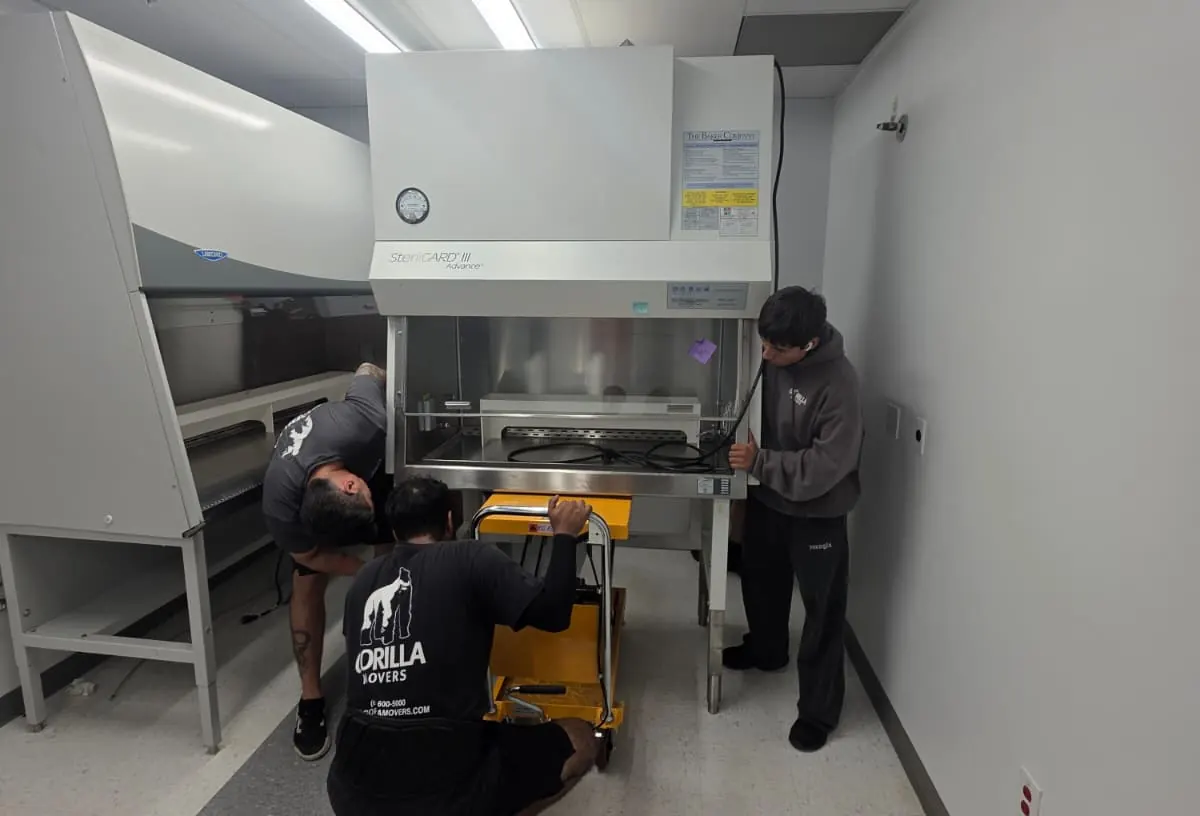
Choose a lab moving company by verifying four things: documented experience with your specific equipment classes (centrifuges, analyzers, imaging, cold storage), services that protect scientific integrity, inventory control, chain of custody, climate-controlled transport, and coordinated decommission and recommission, licensing and insurance appropriate to high-value scientific assets, and a planning process that starts months out and schedules around your research, not the mover's calendar. In San Diego's biotech corridor, the movers worth hiring can name labs they've moved.
A lab move is a compliance project with trucks attached
Between Torrey Pines, Sorrento Valley, and the UTC corridor, San Diego labs relocate constantly, startups outgrowing incubator benches, established facilities consolidating, research groups chasing better space. Every one of those moves carries stakes a normal office move doesn't: instruments that cost more than the truck, samples representing years of work, and regulatory obligations that don't pause for moving day.
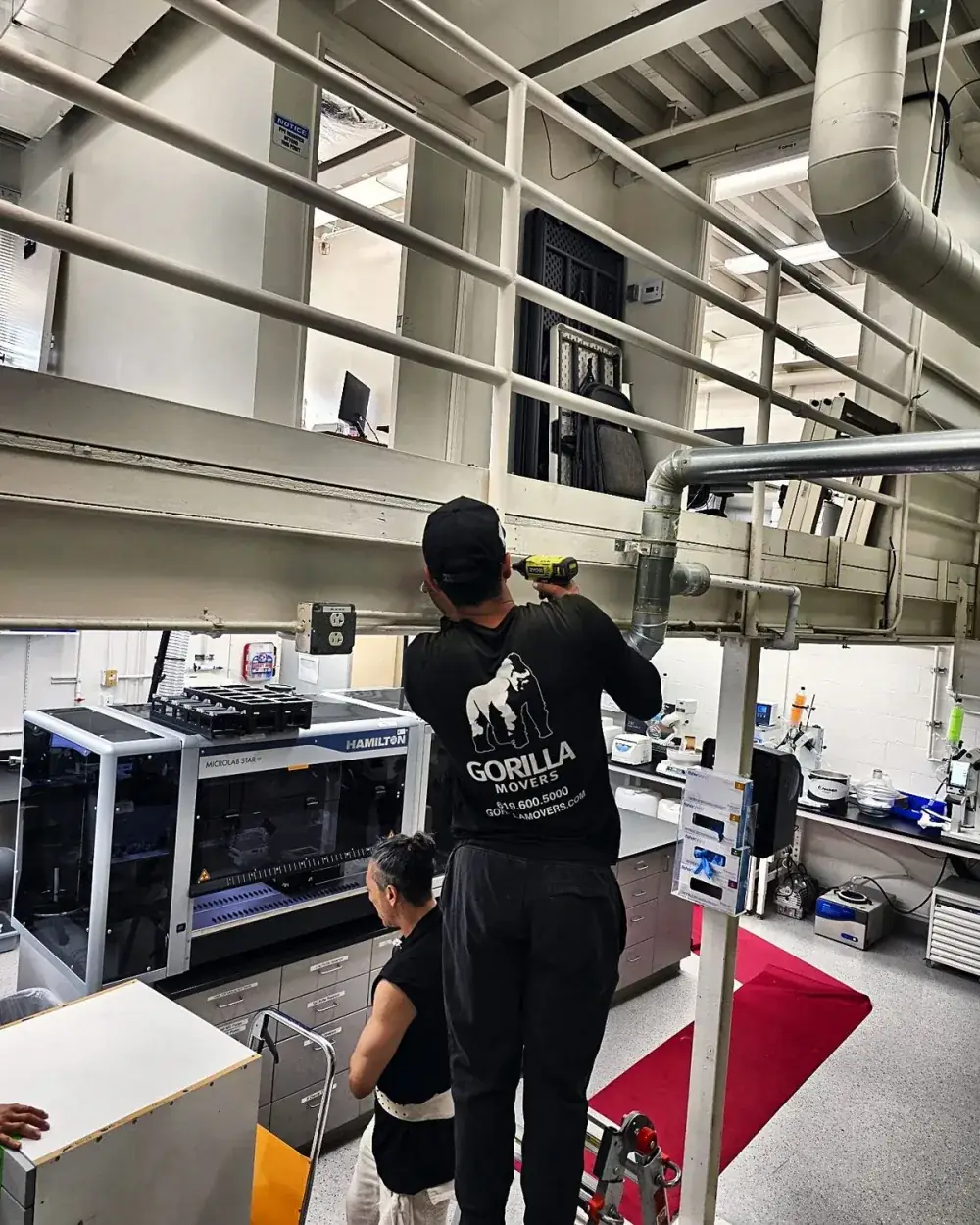
A badly run lab move shows up as damaged analyzers, lost calibration, a compromised cold chain, or research downtime measured in grant dollars. So the mover-selection question isn't really 'who can carry this', it's 'who can carry this without breaking the science.' That reframing drives everything below.
Our warehouse sits in the middle of the corridor, minutes from the Torrey Pines mesa and the Sorrento Valley research parks, and lab relocation has been part of our commercial work for years. What follows is the vetting we'd want if we were the ones hiring.
The equipment decides everything
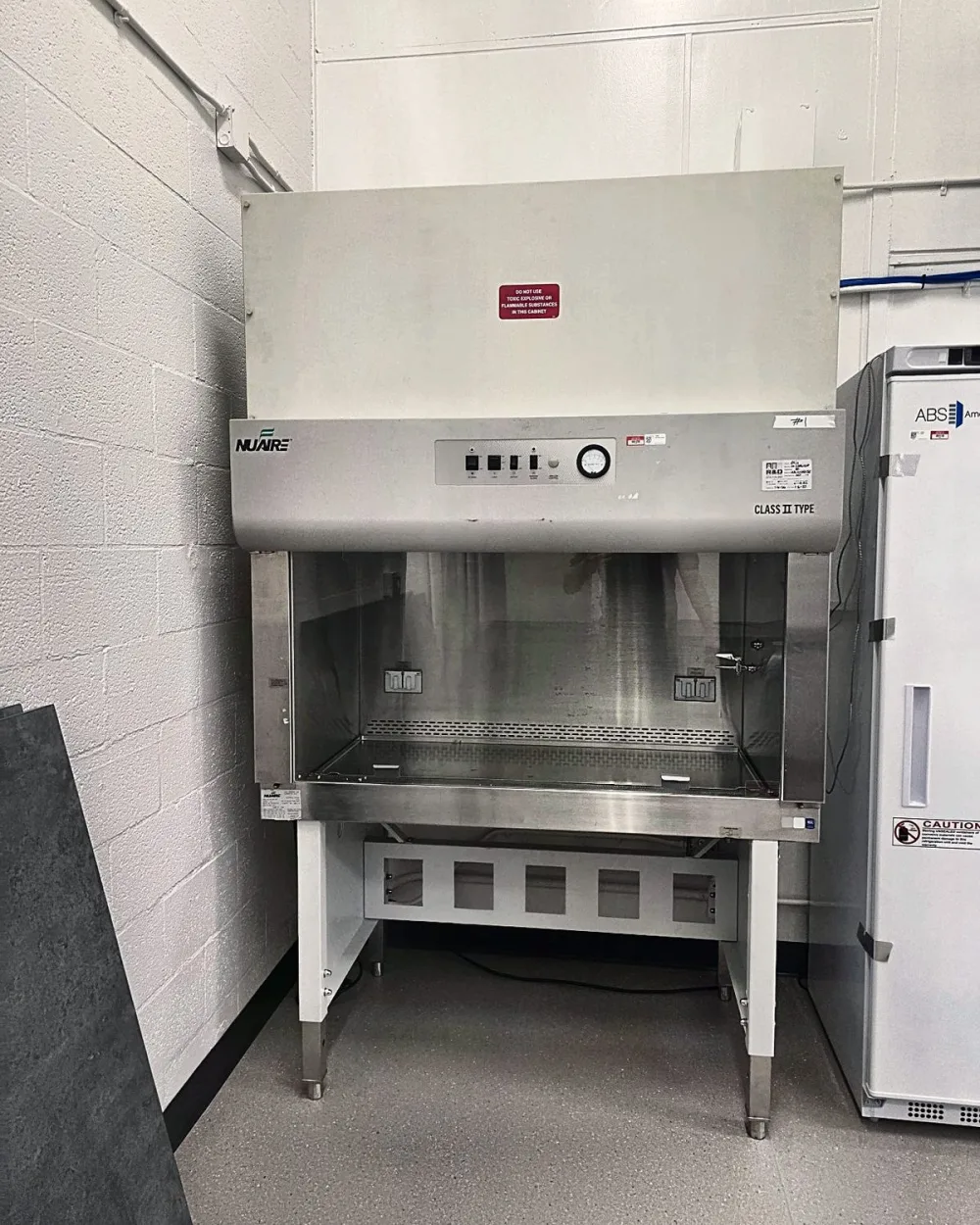
Start your vetting from an equipment list, because each class of instrument fails differently in transit and demands different handling. The failure modes are specific: shock knocks optics out of alignment, vibration ruins bearings and rotors, temperature excursions kill samples, and a hard jolt can end an analyzer's calibration in a way that only a service visit fixes. A mover who asks for your instrument list before quoting is thinking about the right problems; one who quotes by square footage is moving furniture that happens to be scientific.
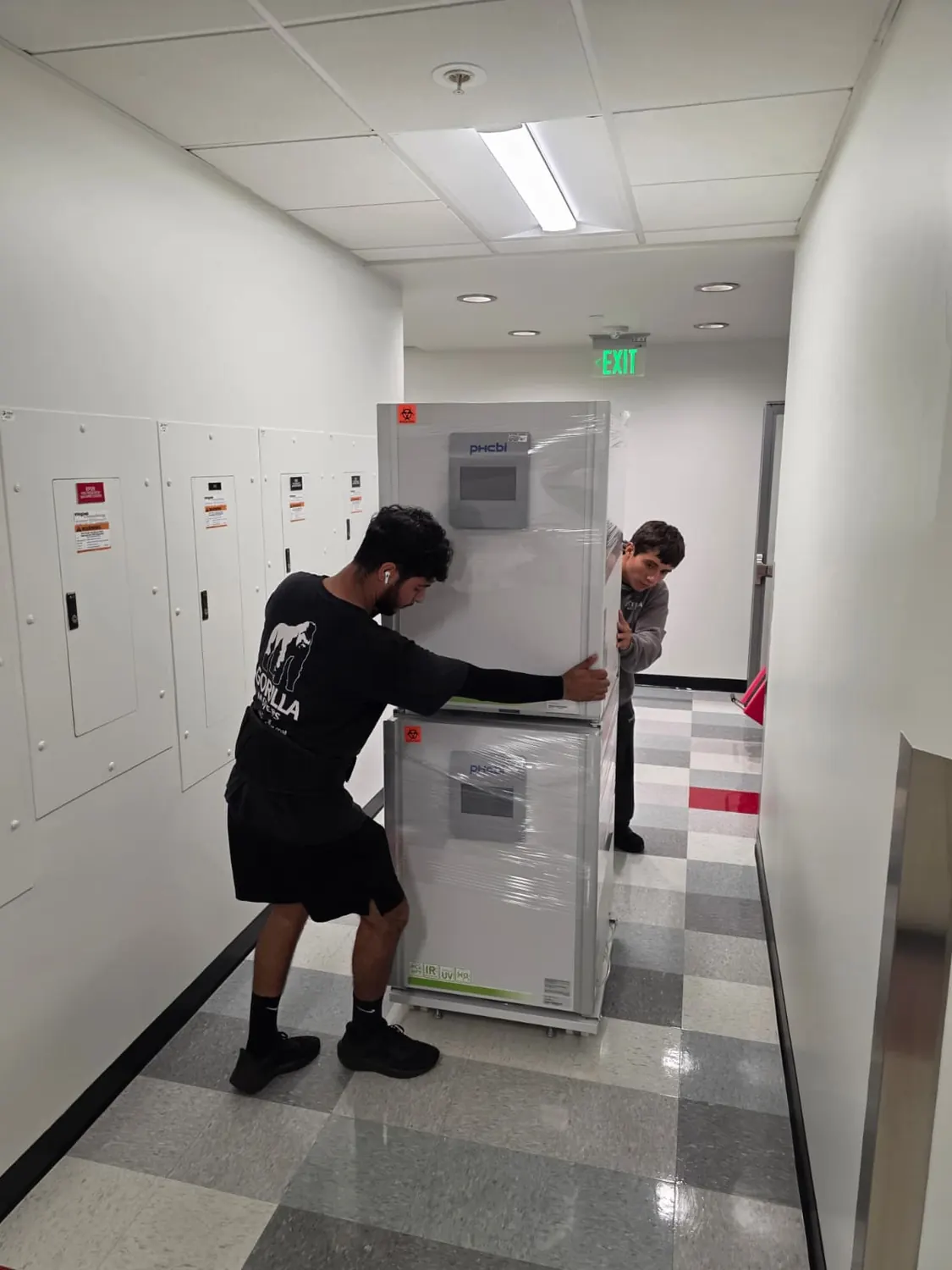
The classes that decide the plan:
- Centrifuges, rotors and bearings hate shock and vibration; improper packing means misalignment and expensive rebalancing
- Analyzers, computer-controlled, calibration-dependent, and allergic to jolts; they need shock-isolated crating and gentle load paths
- Imaging and optical equipment, microscopes, ultrasound, and larger imaging systems combine fragility with bulk, and misaligned optics turn precision instruments into furniture
- Cold storage and sensitive samples, ultra-low freezers and temperature-dependent materials need a transport plan measured against every minute off power
- Anything under manufacturer service contracts, many instruments require manufacturer or certified-tech involvement in decommissioning to keep warranties and calibration certificates valid
Services that separate lab movers from box movers
A lab-capable mover offers a specific service stack, and you should hear it described without prompting. Inventory management with item-level tracking, so every instrument and case is accounted for from bench to bench. Chain-of-custody documentation, so sensitive equipment and materials have an unbroken, signed trail, the thing your compliance officer will ask about first. Climate-controlled transport for anything with temperature or humidity limits.
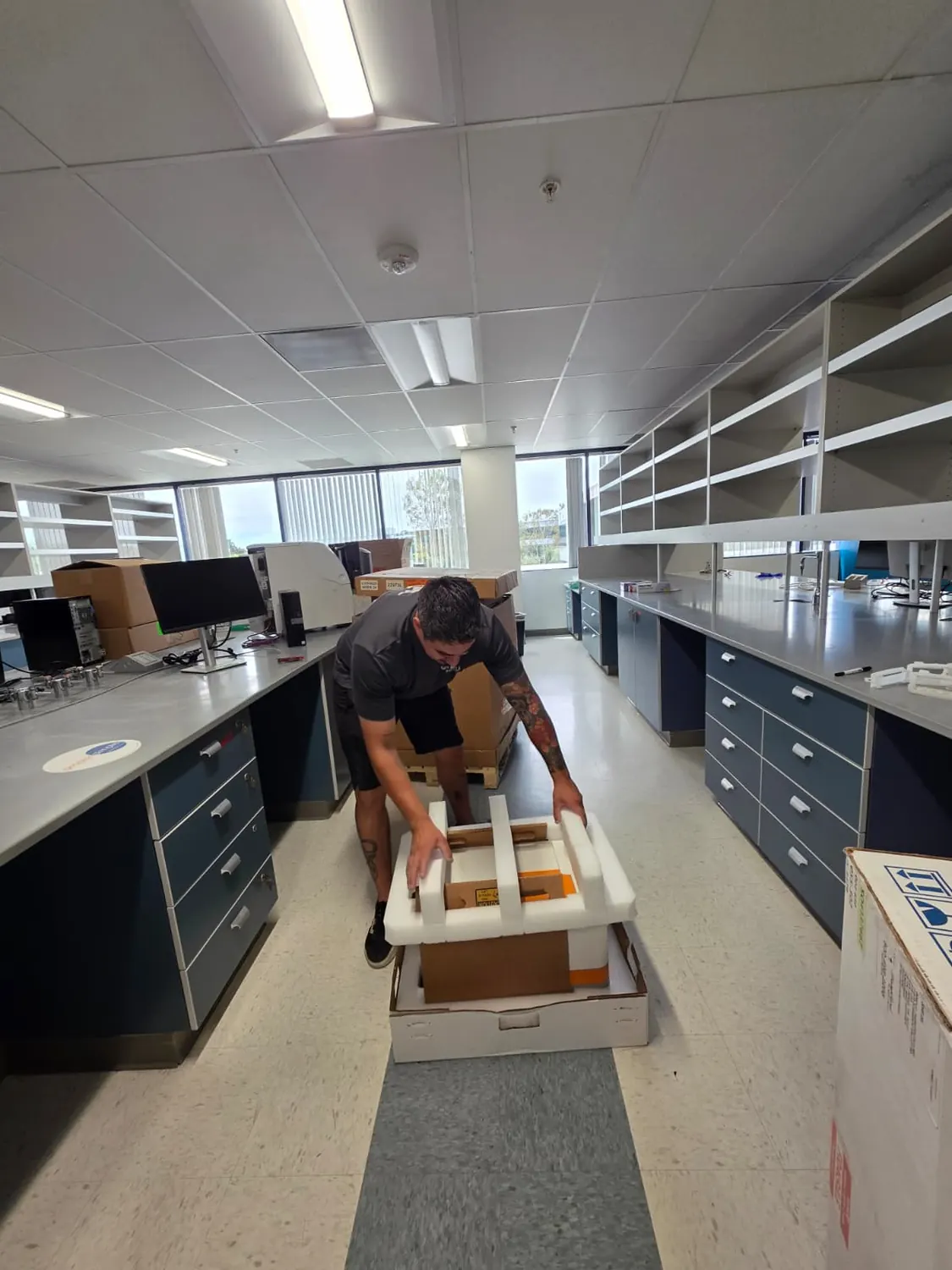
Then the ends of the move: coordinated disassembly and reassembly, planned around manufacturer techs where warranties require them, with crating built to each instrument's size and sensitivity. Ask directly how the mover coordinates with equipment vendors, your facilities team, and your lab manager, a real answer describes a planning meeting, not a promise.
One honest boundary matters here: regulated hazardous materials, chemicals, biological samples, radioactive sources, typically travel under specialized licensing, often through dedicated couriers or your own EH&S procedures. A trustworthy mover says so plainly and plans around it rather than claiming to handle everything.
Packing is where the service stack becomes visible. Lab-grade crating means shock-absorbing foam cut to the instrument, vibration-dampened pallets for the sensitive pieces, and handling labels, fragile, this side up, temperature sensitive, that actually govern how the load is treated rather than decorating it. Ask to see photos of comparable crated instruments from past jobs; movers who do this work have them.
The compliance questions to ask directly
Vet a lab mover the way you'd vet any vendor touching regulated work. Confirm state and federal licensing (ask for the numbers, ours are CAL T-192729 and USDOT 3801918) and insurance with cargo limits that make sense against instruments that can individually exceed six figures. Ask how their crews are trained and whether they're employees or day labor; chain of custody means little if the chain includes strangers hired that morning.
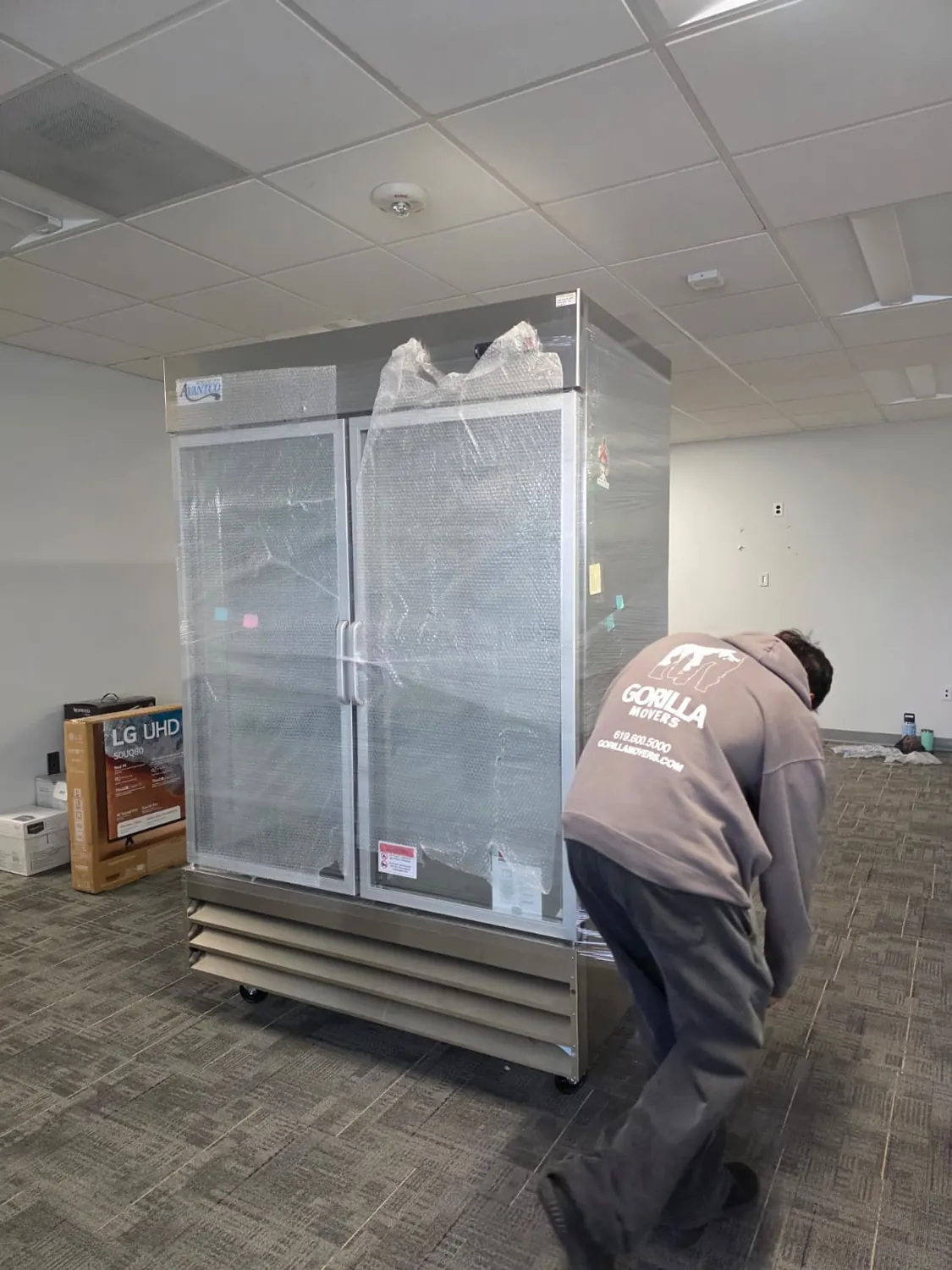
Then probe regulatory fluency. OSHA governs the safety of the work; DOT rules govern what can travel and how; EPA and state rules touch chemical handling and disposal. Your mover doesn't replace your EH&S team, but they need to work inside those frameworks without being taught. Labs in shared research buildings should also ask about certificates of insurance and freight elevator coordination, the mundane logistics stop more lab moves than the exotic ones.
Facility fit is the last compliance layer. Clean rooms, sterile suites, and controlled-access floors impose their own rules on who enters and how equipment travels through them, and a mover should ask about your facility's layout, corridor widths, elevator capacity, staging space, during the walkthrough, not on move day. The size and rhythm of your operation matter too: a 24/7 diagnostic facility can't be moved on the same plan as a nine-to-five research bench, and the mover's schedule should prove they understand the difference.
Plan in months, execute in days
The lab moves that go well start planning eight to sixteen weeks out. The sequence: full equipment and materials inventory first, then vendor scheduling for instruments needing manufacturer decommission, then the move plan itself, what moves in which phase, what stays live until cutover, and how cold storage transfers with minimal off-power time. Contingency buffer belongs everywhere, because instrument service schedules slip and construction on new lab space slips more.
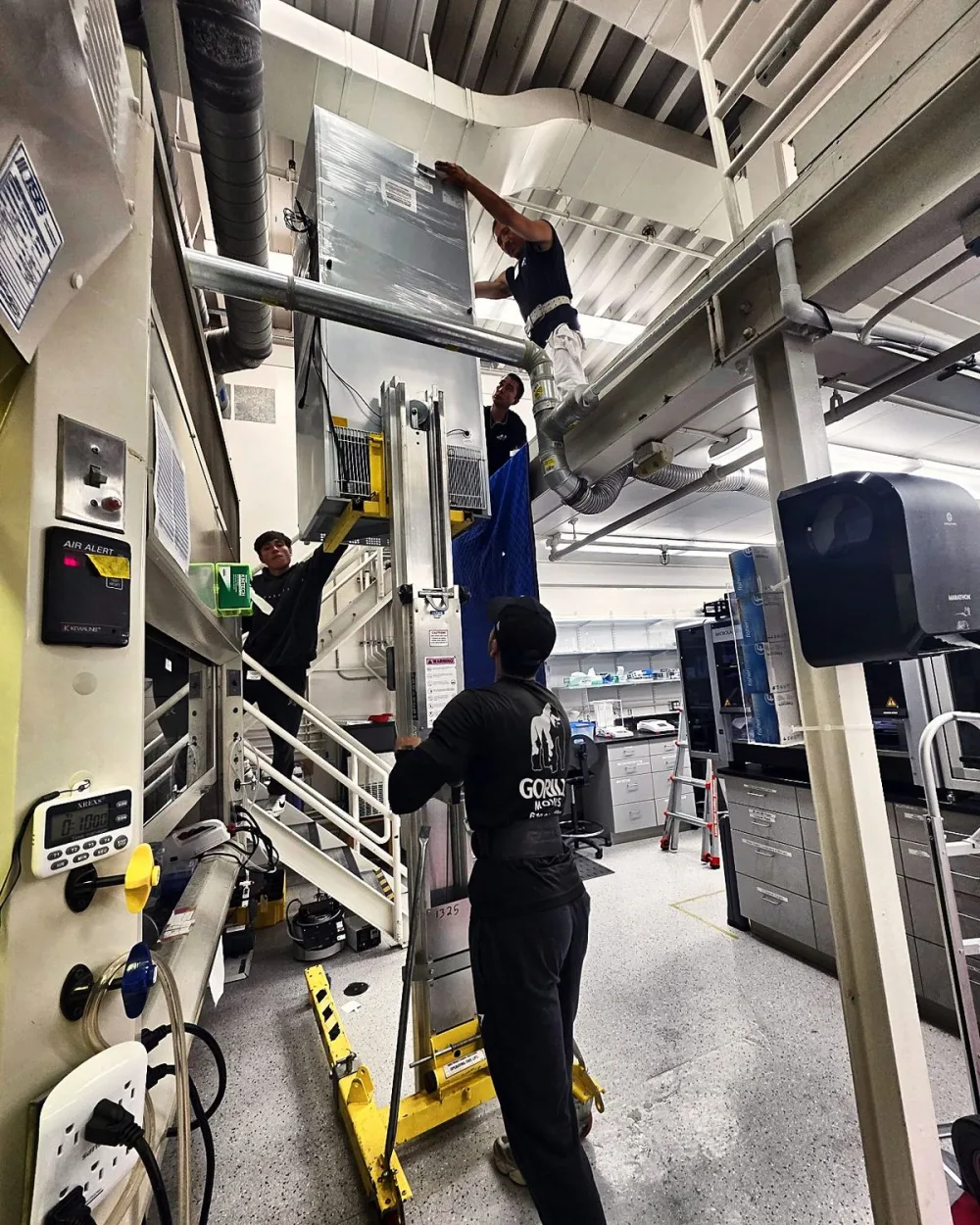
Schedule the physical move around the science. Ongoing experiments, time-sensitive assays, and clinical obligations dictate the calendar; weekends and off-hours moves keep facilities operational through the transition. A mover who asks about your research schedule before proposing dates is the one who understands the job.
Phasing is usually the answer to downtime. A common pattern: non-critical equipment and stores move first, the new space comes online and gets verified, then instruments transfer in planned waves with recommissioning between them, and the cold chain moves last in a single tightly rehearsed window. At no point is the whole lab dark, which is the entire objective.
The final test is simple: ask the candidate to walk you through their last comparable lab move, start to finish. Specifics, instrument classes, phasing, problems and fixes, mean experience. Generalities mean you're the experience.