San Diego Lab Movers
Gorilla Movers relocates San Diego research labs with cold-chain control, chain-of-custody documentation, and manufacturer-coordinated instrument handling. Since 2008, we plan every lab move so the science survives intact.
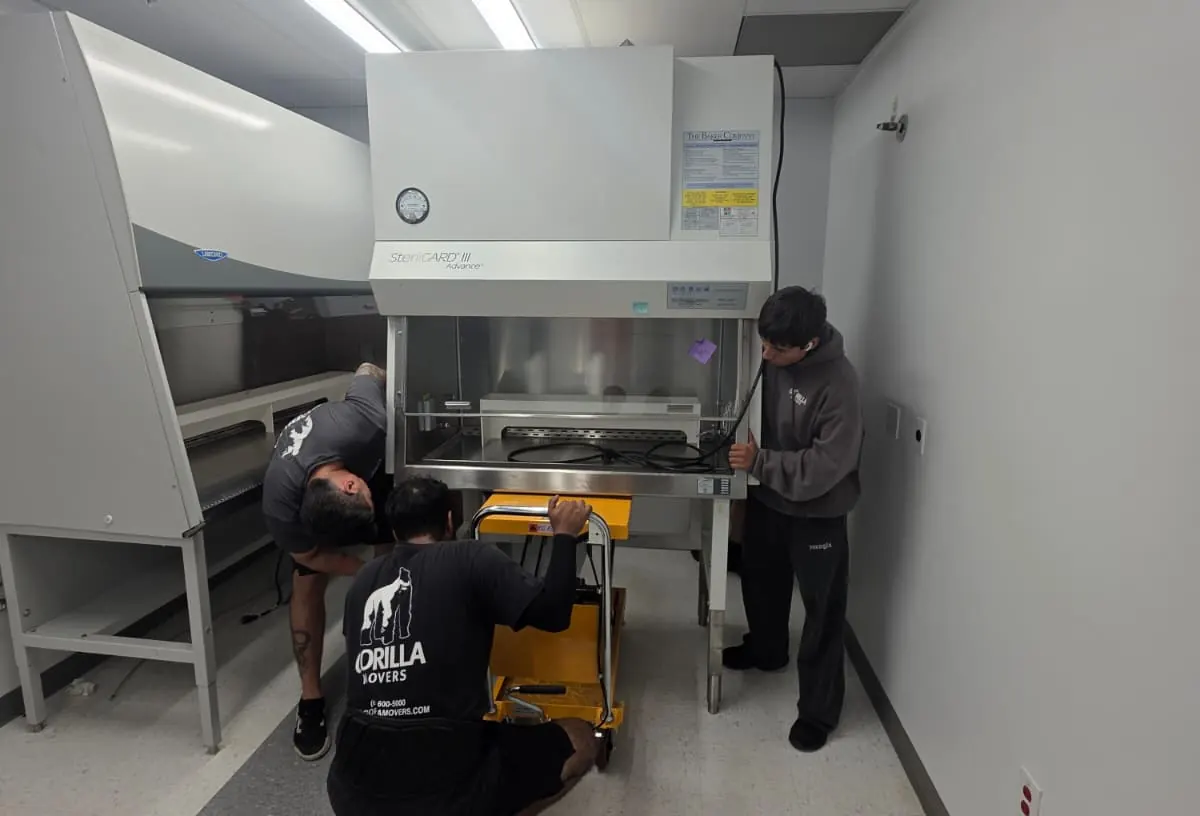
Gorilla Movers is a San Diego laboratory moving company working the biotech corridor from Sorrento Valley through Torrey Pines and UTC. We relocate minus 80C ULT freezers with their frozen contents, liquid nitrogen cryogenic storage and LN2 dewars, biosafety cabinets and Class II hoods, chemical fume hoods, mass spectrometers, HPLC systems, confocal microscopes, and sequencers. Every move runs on a tagged asset inventory, cold-chain temperature records, and chain-of-custody logs that support GLP, GMP, and broader GxP quality systems, with instrument de-installation and post-move verification coordinated through the manufacturer's field service engineers. Lab moves are phased around running science rather than forcing a shutdown, and they are quoted from a free on-site walkthrough. Call 619-600-5000.
Who moves laboratories in San Diego?
San Diego runs on science. The corridor from Sorrento Valley up through Torrey Pines and out to UTC holds one of the densest concentrations of biotech, genomics, and pharmaceutical research in the country, and every lab in it eventually has to move. A lease ends, a startup graduates from incubator bench space into its own suite, a growing company consolidates three floors into one building. When that day comes, you are not moving furniture. You are moving irreplaceable cell lines, six-figure instruments, and active experiments that cannot simply pause. Gorilla Movers has relocated San Diego labs since 2008, and we plan every one of them around a single rule: the science survives the move intact.
Most moving companies treat a lab like an oversized office. That is how samples thaw, how a mass spectrometer arrives out of calibration, and how a research program loses months. Lab relocation is a discipline of its own. It demands cold-chain control, chain-of-custody documentation, coordination with instrument manufacturers, and a phased schedule that respects work still happening on the bench. That is the work we do, and we do it with our own background-checked uniformed employees, never day labor pulled in for the weekend.
What lab equipment can you relocate?
How do you keep frozen samples cold during a lab move?
The two things most likely to go wrong in a lab move are a broken cold chain and a lost sample. We control both with documentation and time discipline. Before anything moves, we build an asset inventory that tags every freezer, instrument, and container. Frozen and cryogenic materials get logged by rack, box, and position, so a -80C inventory that leaves the old site is reconciled item by item at the new one. Nothing is checked off until it is accounted for at destination.
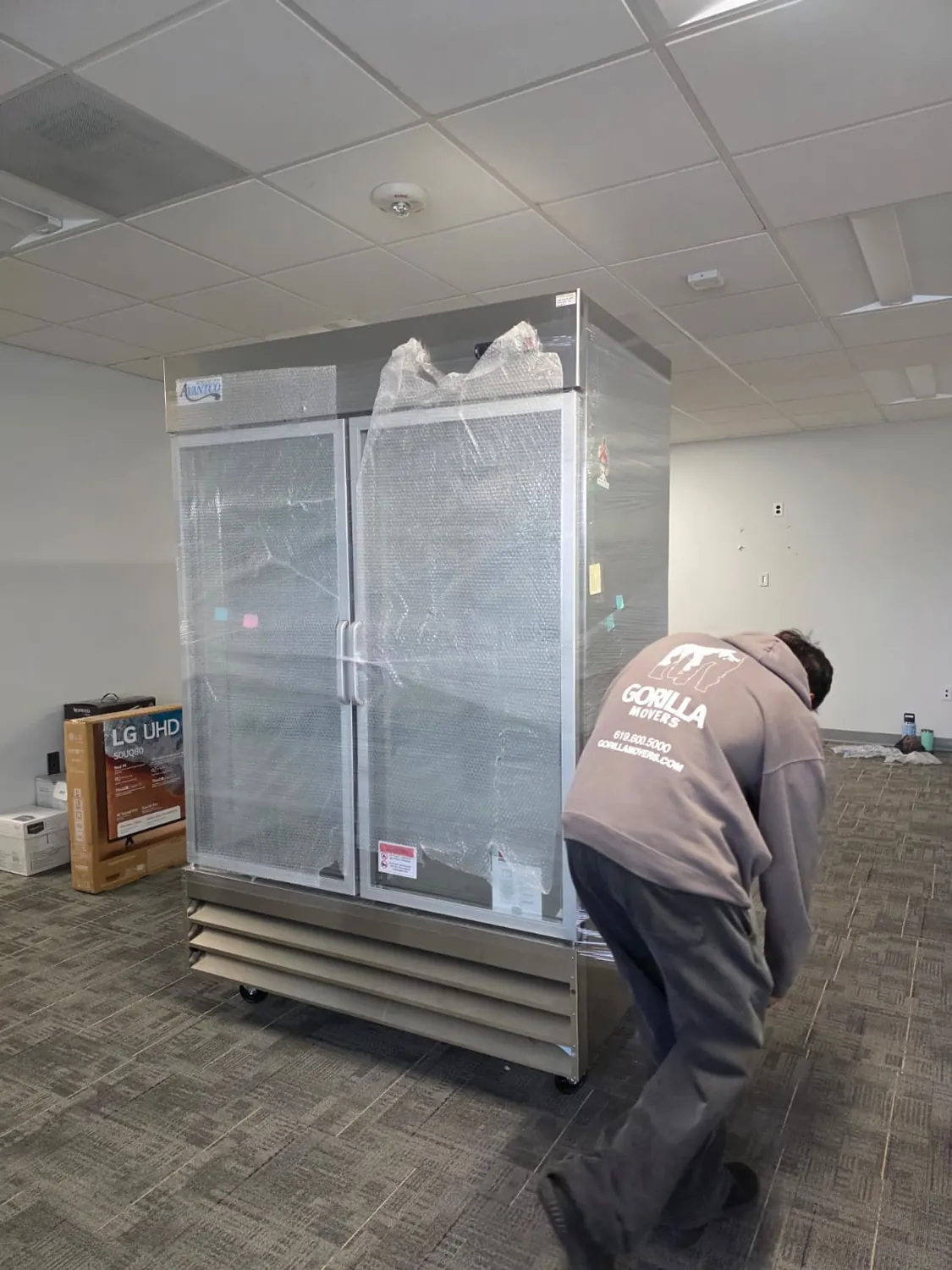
Cold chain is a race against a clock, and we plan the clock in advance. A packed -80C freezer holds temperature for a limited window once it is unplugged, and that window shrinks fast on a warm Sorrento Valley afternoon. We keep transfers short by staging validated transport: dry ice or LN2-charged carriers for samples that move separately, and powered transport or tight door-to-door timing for freezers that travel loaded. Temperature is monitored through the move, not assumed. For the highest-risk material we recommend moving samples into interim storage or backup freezers first, so the empty units can travel without a countdown attached.
Cryogenic handling has its own rules. LN2 dewars and vapor-phase storage are moved upright and secured, by crew trained in the oxygen-displacement and cold-burn hazards that come with liquid nitrogen. We coordinate LN2 top-off timing so cryo inventory never rides low on the day of transport.
How much downtime should a lab expect?
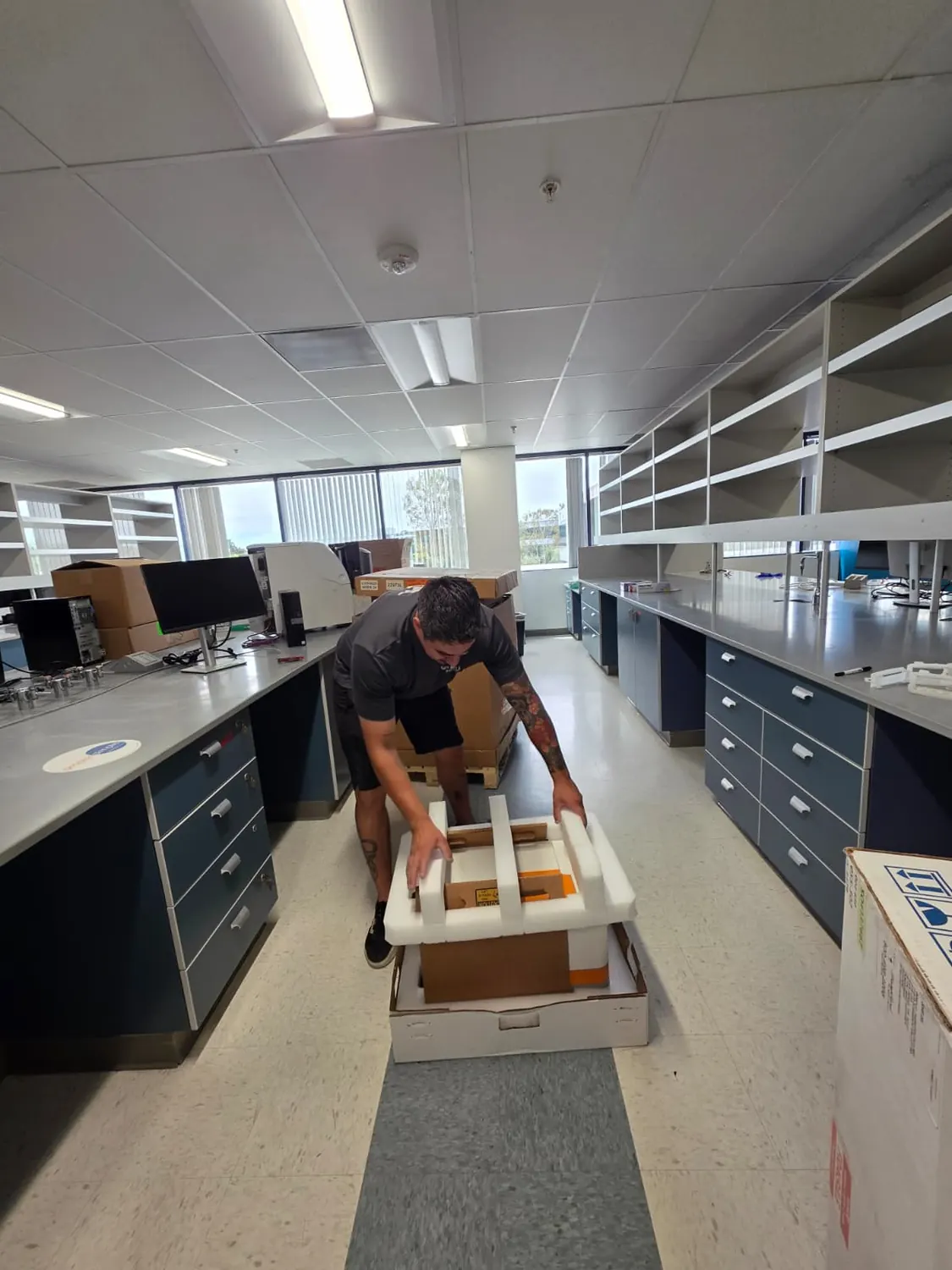
Very few San Diego labs can go dark. Research is running, grant timelines do not pause for a lease change, and a company burning through runway cannot afford a two-week blackout. So we phase the move around the science instead of forcing the science to stop.
That usually means sequencing the relocation by function. Instruments and benches not currently in use move first. Active workstations, incubators running live cultures, and freezers holding irreplaceable stock move in a tightly scheduled window, often overnight or across a weekend, so the receiving lab is powered, validated, and ready before those assets arrive. We build the plan with your facilities team and your PIs, mapping which systems can be offline when and for how long. The goal is continuity: a bench that shuts down Friday is back in service Monday, not the following month.
We also handle the destination readiness that makes phasing work. Freezers need dedicated circuits and a power plan before they arrive. Fume hoods and biosafety cabinets need their utilities and certification in place. We coordinate so equipment is not sitting on a loading dock waiting for an outlet.
Do instruments need recalibration after the move?
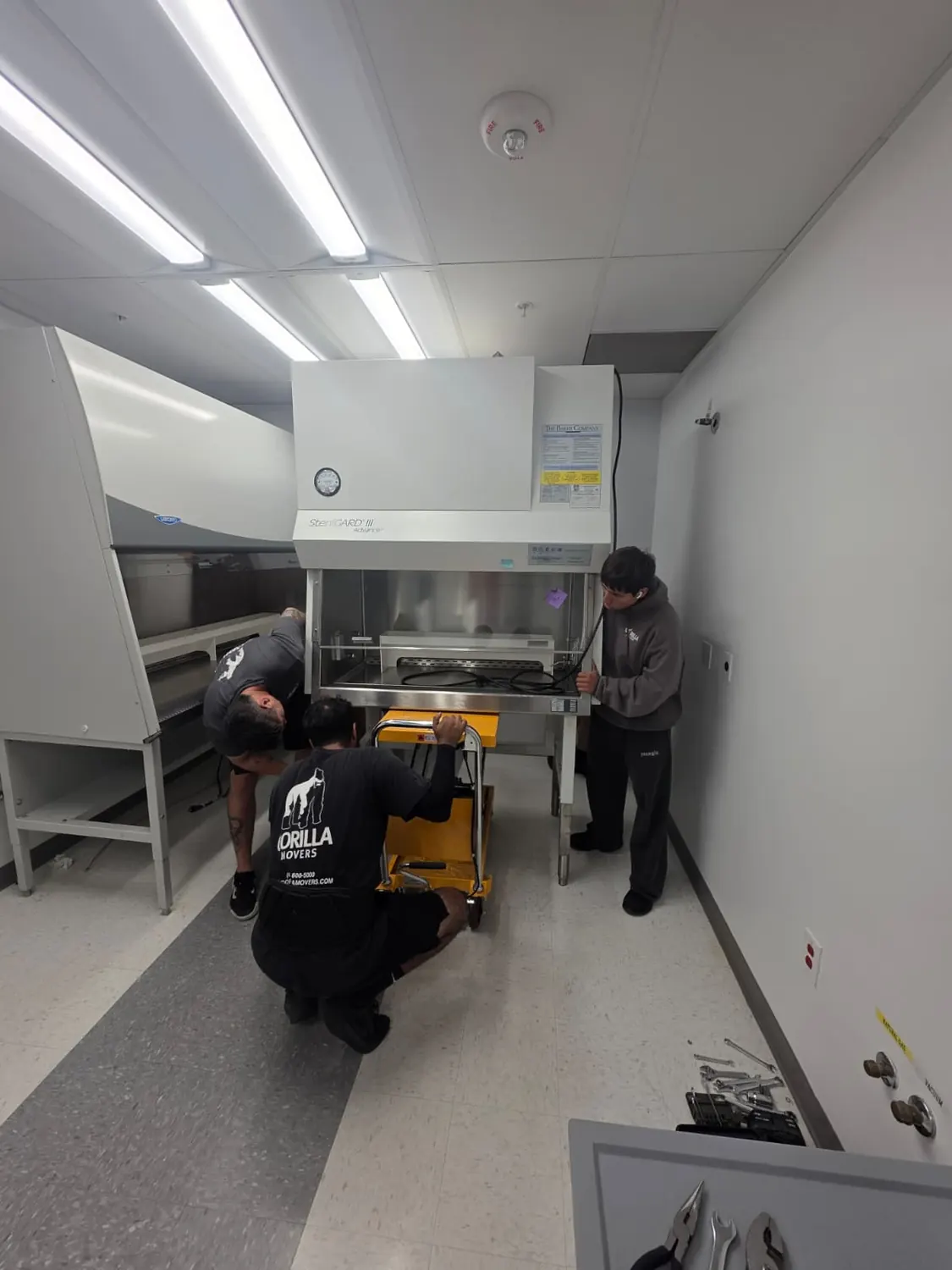
Sensitive instruments should not be unbolted by movers alone, and they should not be trusted after transport without verification. For platforms like mass spectrometers, HPLC systems, confocal microscopes, and sequencers, we coordinate with the manufacturer's field service engineers to de-install the instrument on the front end and re-install, level, and recalibrate it on the back end. That protects your warranty, keeps the service contract intact, and gives you documented proof the instrument performs to spec after the move.
We schedule that engineer coordination into the master timeline so the tech is on site when the instrument lands, not two weeks later while your bench sits idle. Where a manufacturer requires specific crating, shock-and-vibration monitoring, or transport orientation, we build to that spec. Our crews handle the physical move, the OEM handles the certification, and we make the two line up.
Can you support GxP, GLP, and GMP documentation?
Labs operating under GLP, GMP, or broader GxP expectations cannot treat a move as an undocumented event. Regulators and quality systems want a record. We produce move documentation that supports your quality framework: asset inventories with tags, chain-of-custody logs, cold-chain temperature records, and handoff sign-offs at both origin and destination. When an instrument requires calibration or requalification after transport, that OEM record slots into your equipment history. This is exactly the layer most moving companies skip, and it is the layer an FDA-regulated or ISO-audited San Diego facility cannot skip. We build the move so your quality team has a clean file when the audit comes.
We work across every research hub in the county: Sorrento Valley and Sorrento Mesa, the Torrey Pines mesa and its institute cluster, UTC and University City, Torrey Pines Science Center, and the newer life-science developments pushing into Mira Mesa and beyond. We know the buildings, the loading docks, the freight elevators, and the property managers, and we carry the certificate of insurance your building requires as standard. Whether you are a three-person startup leaving incubator space or an established company relocating an entire floor of instruments, we scope the move to what you actually have on the bench.
How do you move a minus 80C ULT freezer?
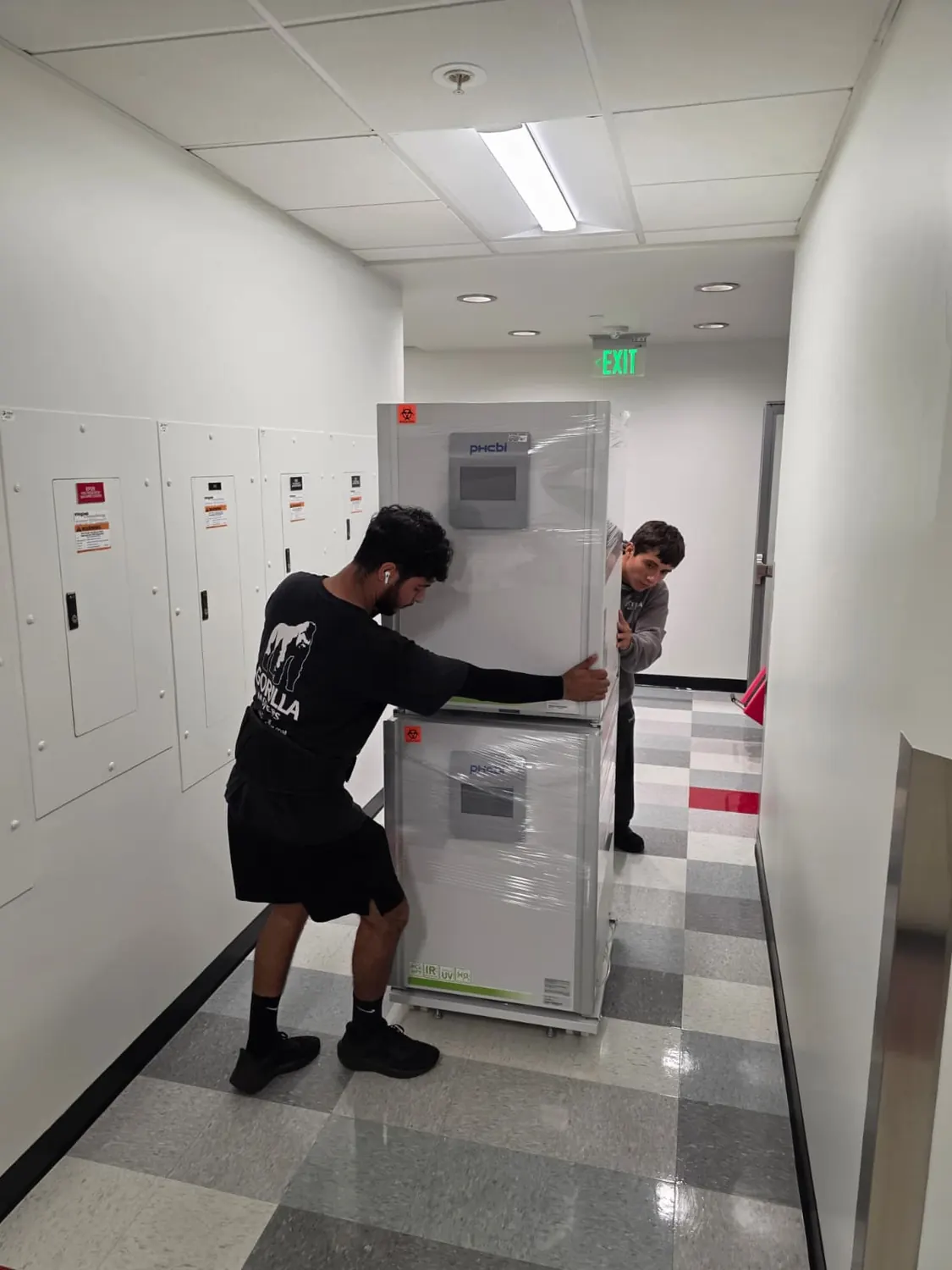
A ULT freezer is the single most consequential thing in most lab moves, because the box is replaceable and the contents are not. The protocol is the same whether the unit travels across Sorrento Valley or across the county, and it starts days before the truck arrives.
Contents are inventoried and logged by rack, box, and position first, so the record exists independently of the freezer. For a short local transit the samples usually stay in the unit, which holds temperature well when it is full, closed, and not opened. For longer transit, or for thermally sensitive material, we stage dry ice or bring backup ULT capacity online at the destination before anything leaves. The unit itself travels upright and strapped, never on its back, with a temperature logger inside and the door taped shut.
At the destination the freezer is set, leveled, and powered back up empty so it can pull down to temperature and hold there before samples go back in. The logger comes out and the record goes into your move file alongside the inventory, which is what a quality system or a grant auditor will ask for later.
What drives the cost of a lab move?
Lab moves are not priced from square footage, because two labs of identical size can differ by a factor of three. What actually moves the number is the instrument list and the access: how many ULT and cryogenic units need cold-chain handling, how many platforms require manufacturer de-installation and recalibration rather than a mover's hands, whether biosafety cabinets and fume hoods need decontamination and recertification, how much of the work has to happen after hours or in phases to keep the science running, and what the loading dock, elevator, and door widths allow at both ends.
We quote labs from a free on-site walkthrough with your facilities or PI contact, because those answers cannot be gathered over the phone. The walkthrough quote is binding and itemized, so you can see which line is the crew, which is the vendor field service, and which is the certification, and take the parts you want internally.
Lab Movers in San Diego: biosafety cabinets, incubators and cold chain
The challenges
How we solved it
Four phases to open on time.
Free on-site walkthrough
We survey the space, inventory the assets, and hand you a binding quote with a project plan.
Pre-move planning
A named project manager coordinates schedules, building COIs, elevator reservations, and IT cutover.
Move management
After-hours or weekend execution by our own uniformed crews, live-tracked station by station.
Post-move support
Reconfiguration, punch-list walkthrough, and debris removal, so Monday opens on time.
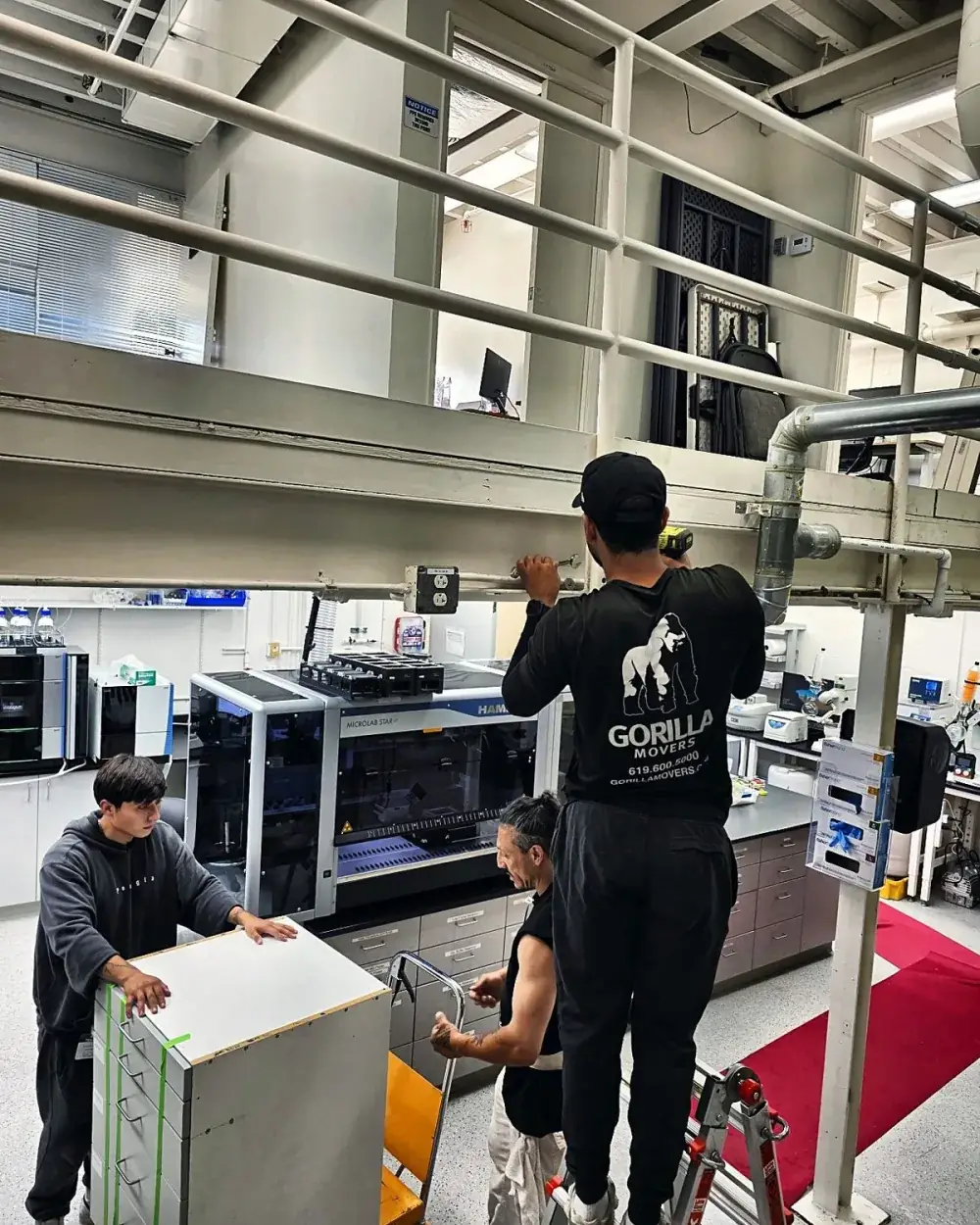
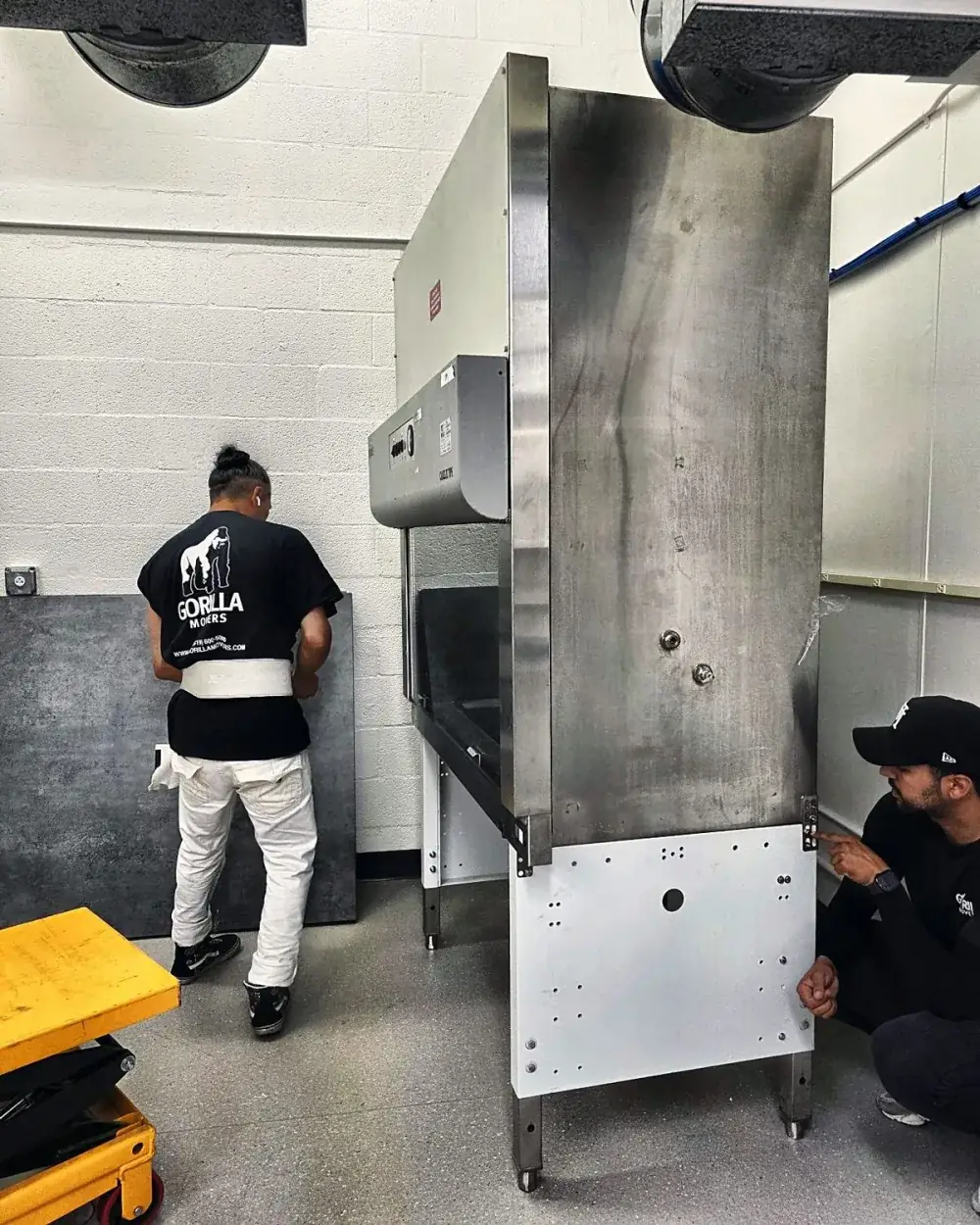
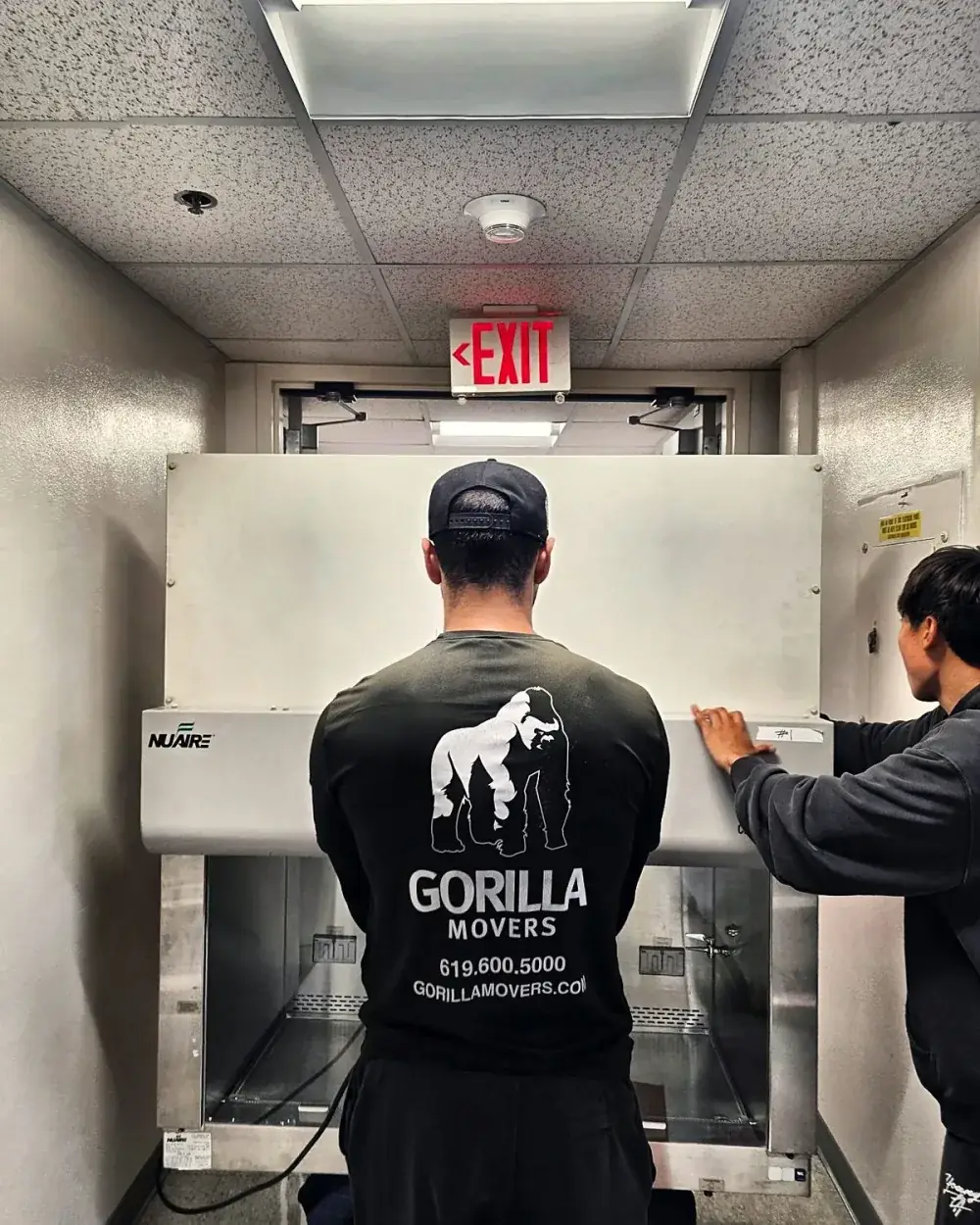
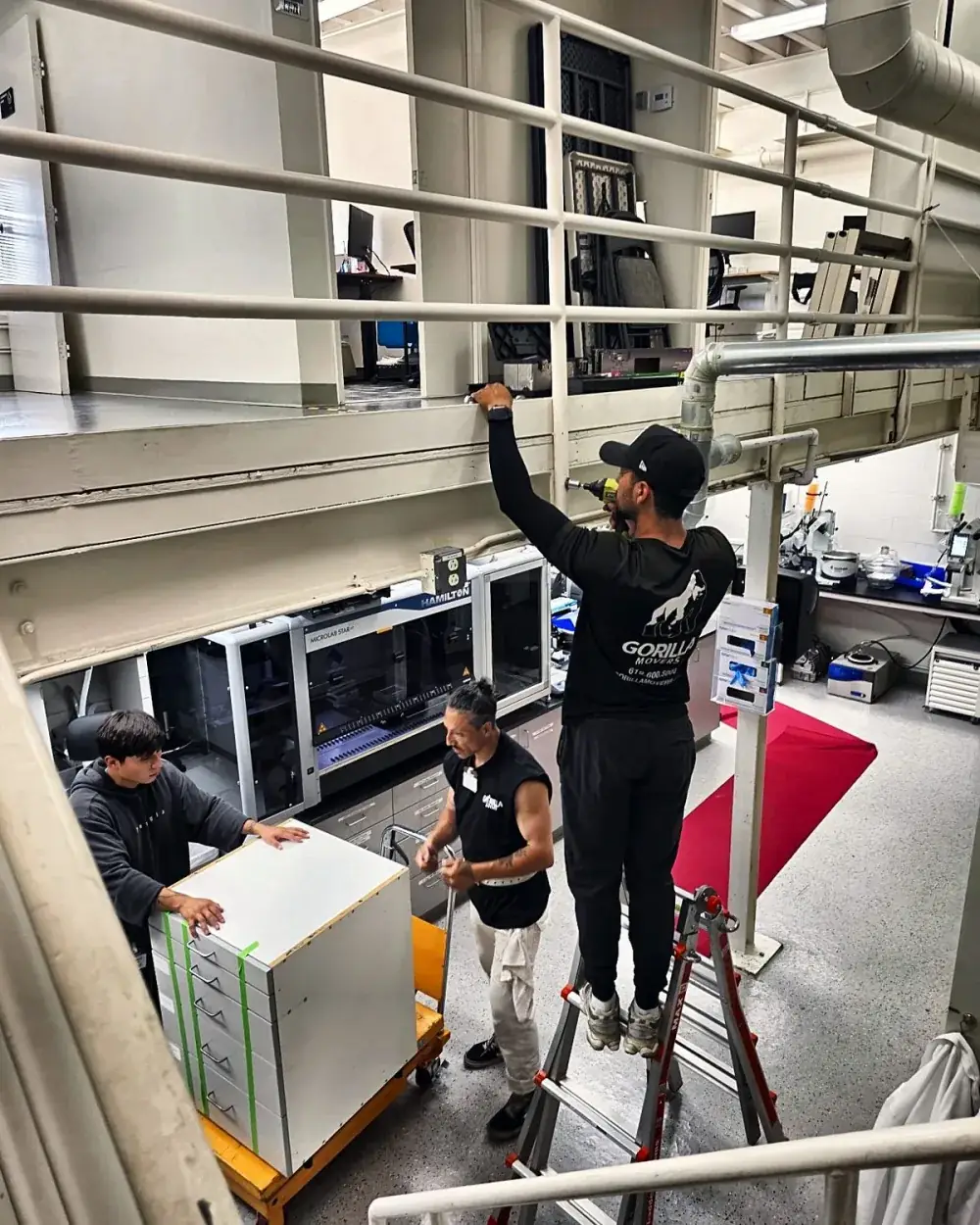
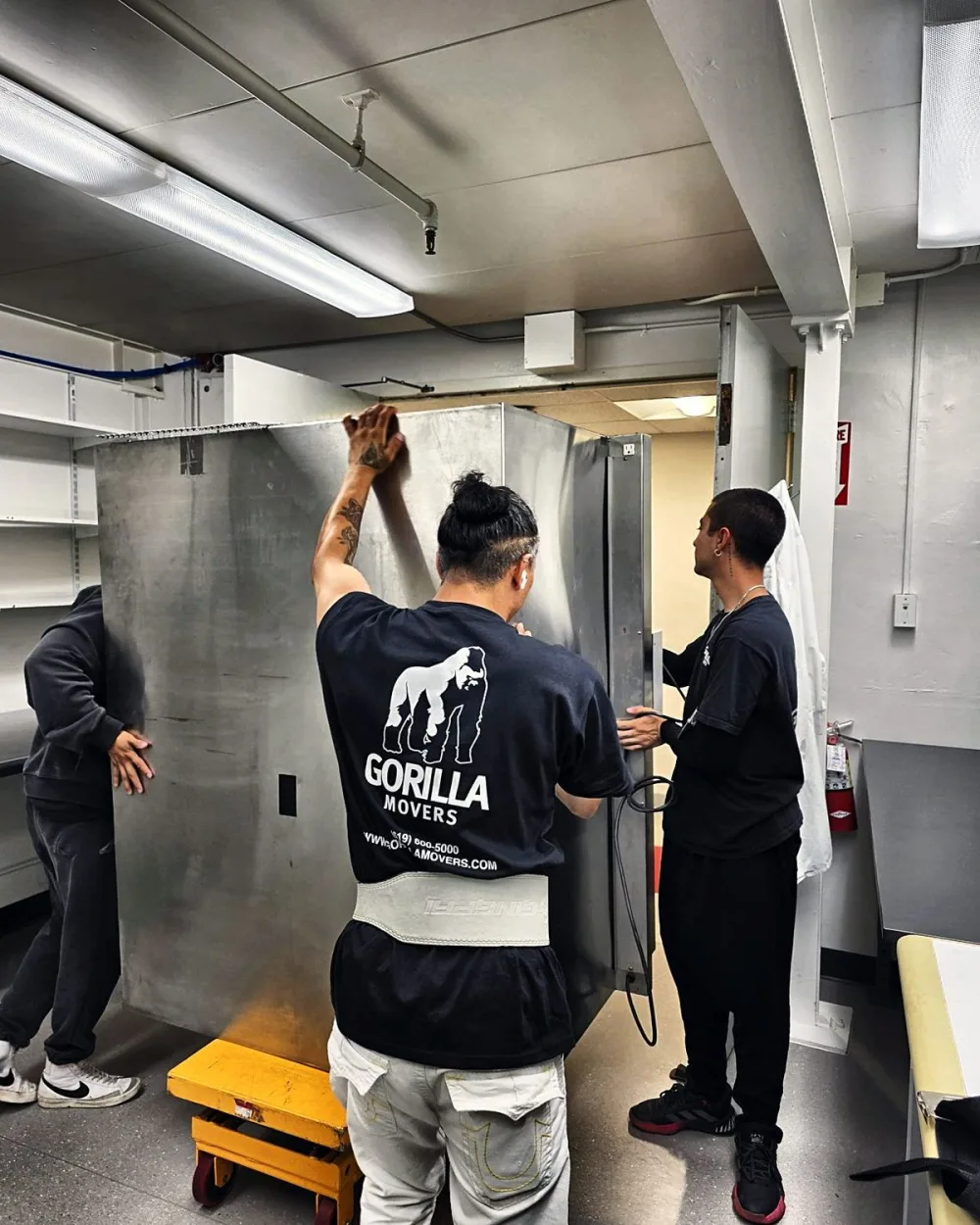
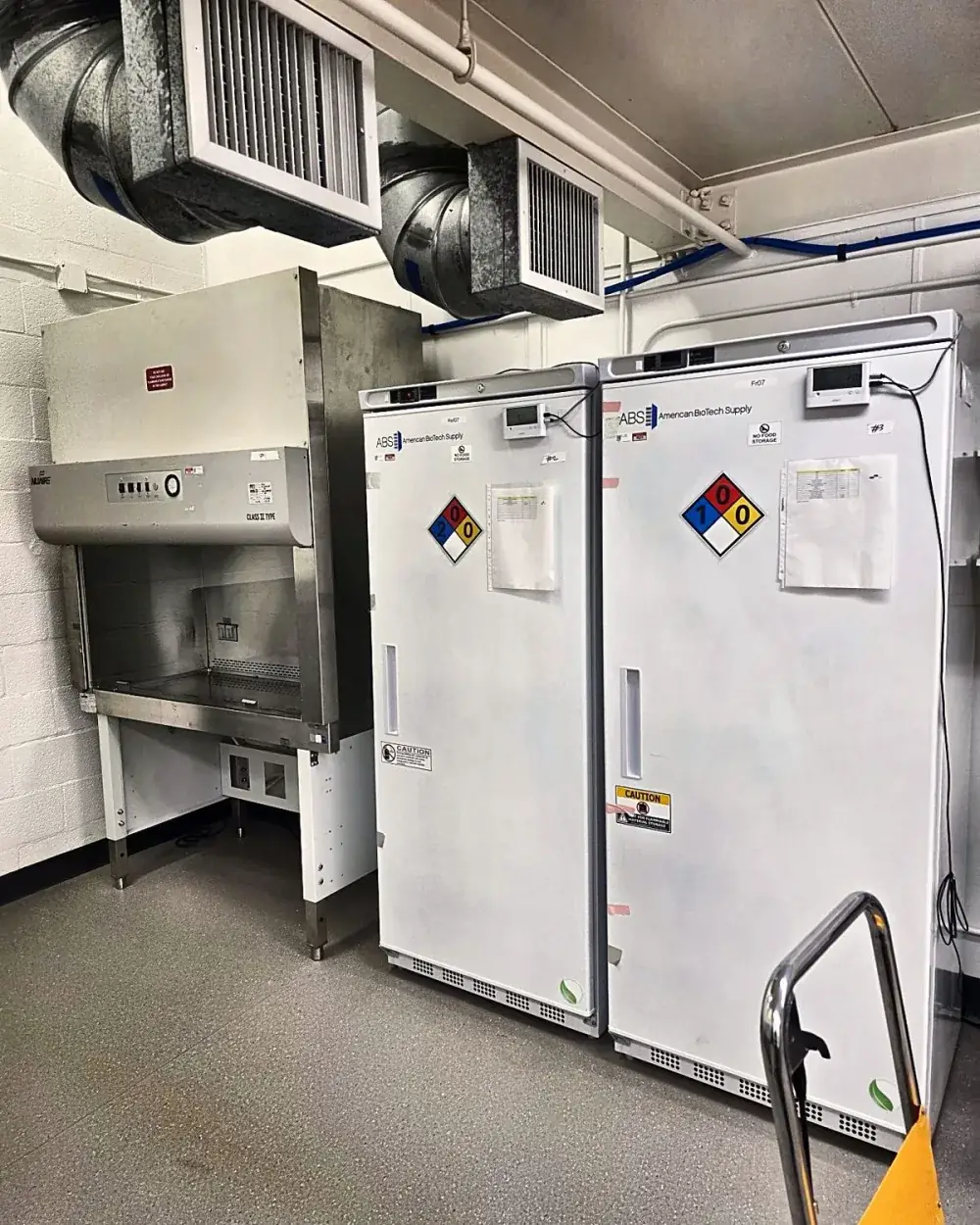
Real San Diego lab jobs, not stock photos.
Lab Movers questions, answered.
How do you protect frozen samples and cell lines during a move?
How much downtime should our lab expect?
Do you recalibrate instruments after the move?
How do you insure high-value lab instruments?
How do you keep -80C freezers powered during transport?
Can you do the move on a weekend or overnight?
Do you handle decontamination and certification of hoods and cabinets?
Can you support GxP, GLP, and GMP documentation requirements?
Can you move a whole lab or just specific equipment?
How soon can you move our lab?
San Diego keeps calling us back. 4.8★ across 353 Google reviews.
“Gorilla movers did a fantastic job moving my mother in Oceanside. Raul was incredible. From the moment he arrived, he was very strategic in how he would complete the job. I had doubts with all of the stuff we had but trusted his knowledge and experience and he exceeded our expectations! They take care of your items, asked a lot of questions and consistently checked in on if there was anything else they could help with. Raul, not sure if we could have done this move without you!! Thank you so much and than you Gorilla movers!! -Jackie, Marty, and Liz”
“Alex and the crew were very professional and took great care of our stuff. We booked on short notice and they were accommodating and communicated throughout the move. They even helped move some of the boxes of stuff from our garage to the appropriate rooms as we had a little extra time.”
“We used Gorilla Movers 7 years ago and they did an excellent job. So we hired them again for our current move and they worked so hard. This time we were moving our belongings into pods and the perfectly wrapped our furniture for a long move. They also perfectly packed the pods so we could fit all of our belongings. I highly recommend this moving company.”
“100% excellent customer service and professional movers. They have a great attitudes. They handled glass, large art and some heavy furniture,,, everything with care in two different moves. Plus their rates are fair. You won’t go wrong.”
“Genuinely honest and hardworking people at this company. You couldn't ask for a better service and well worth it. Absolutely indicative of their already glowing reviews!!!”
“Excellent, careful, friendly movers ... highly recommended!”
“I cannot stress enough the quality of their service, expertise, and responsiveness. Gorilla Movers made the task of relocating my call center operation within the San Diego area far easier than I anticipated. They exceeded my expectations throughout the entire process and will be the first company I call for any future moving needs.”
“Alonzo and Alexis were excellent. They knew exactly what they were doing and were very careful in all the details they performed. They were quick and efficient and very professional in all their duties. They responded well to questions and any changes made. Couldn’t have had two better people help us with our move. Wonderful!”
“Raul and his team were excellent. Not only did he guide the entire process of loading my belongs into the PODS, he went above and beyond to help me organize my things and make sure everything was loaded properly. I would certainly recommend Gorilla Movers and specifically, Raul, again. Thank you to everyone at Gorilla Movers, from start to finish!!”
“Great Staff, Easy to communicate, professional, great with our commercial moving items.”
“Moving my daughter cross country was exhausting & exciting enough. We decided to used Gorilla Movers to unload our rented truck. What a wonderful experience. The two men were professional, respectful and got the job done quick and without any issues. I would highly recommend them!”
“Raul and his crew were very professional. They were quick and polite. 100% would hire them again.”
“Excellent workers great customer service 10/10 amazing”
“I had a fantastic experience with Gorilla Movers! The crew was professional, punctual, and handled all of my belongings with great care. They worked efficiently, communicated clearly throughout the move, and made what could have been a stressful day feel easy and organized. Nothing was damaged, and they went above and beyond to make sure everything was placed exactly where I wanted it. If you're looking for reliable, hardworking movers with excellent customer service, I highly recommend Gorilla Movers. I would definitely use them again!”
Ready to get it moved?
Free on-site walkthrough · binding quote · a plan that protects your business hours
Request a walkthrough