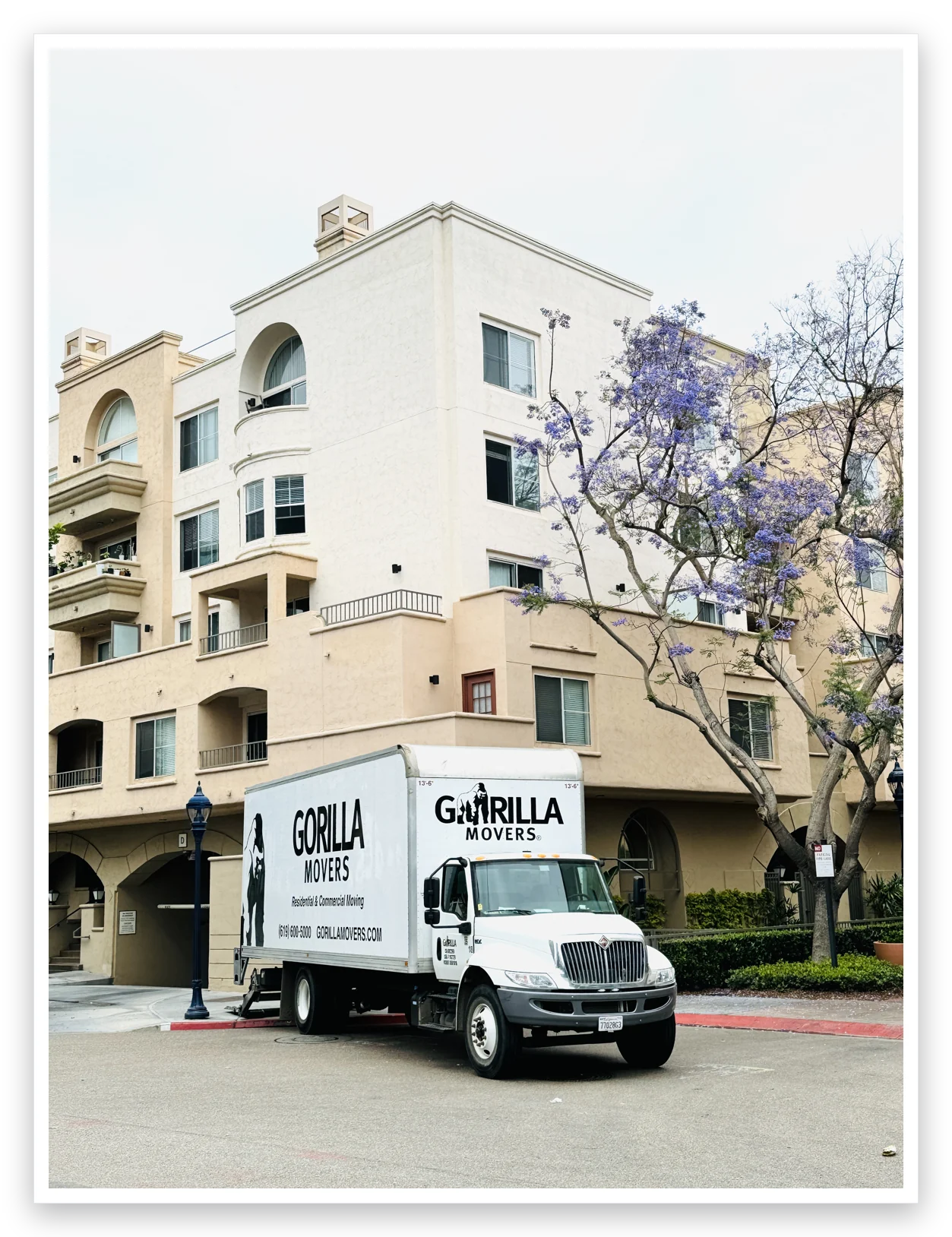
An LA-to-San Diego move is a 120-mile, single-day job for most households: load in the morning, drive the I-5 or I-405-to-5 corridor, unload the same afternoon. It's quoted as a fixed-scope job based on inventory and access at both ends rather than a pure local hourly rate, and your belongings stay on one truck with one crew. The hard part isn't the logistics, it's choosing which San Diego neighborhood fits the life you're moving here for.
Why this move happens so often
We run the LA-San Diego corridor weekly, in both directions, and the southbound stories rhyme. People come for a job at a Sorrento Valley biotech or a UTC tech office. They come because remote work untethered them from an LA commute they never liked. They come for the Navy and Marine Corps, this county's bases pull thousands of families down the 5 every year. And a lot of them come for something harder to put on a spreadsheet: a city where the beach, the airport, and your house can all be twenty minutes apart, and where 'traffic' means something politer than it did on the 405.
Nobody should pretend San Diego is cheap. It isn't. But the trade people describe after a year here is less about the rent check and more about the hours: shorter drives, smaller crowds, and a pace that LA transplants tend to describe with visible relief.
Cost of living: the honest general picture
LA and San Diego are both expensive Southern California metros, and the gap between them is narrower than transplants hope. Depending on the neighborhoods you're comparing, San Diego rents and home prices land in the same league as much of LA, cheaper than the Westside, comparable to or pricier than large parts of central and east LA. What actually changes the monthly math for most people is the second-order stuff: shorter commutes cut fuel and time, and coastal San Diego's mild climate keeps utility bills modest year-round.
Current medians move quarter to quarter, so check fresh numbers for the specific neighborhoods you're weighing rather than metro-wide averages, the spread between, say, Carmel Valley and Chula Vista is far wider than the spread between the two cities.
Where LA transplants actually land
After 18 years of unloading trucks from LA, we've noticed the pattern isn't random. Different profiles land in different places, and knowing the shorthand saves you weeks of scrolling listings.
| Neighborhood | Who lands there | The LA translation |
|---|---|---|
| North Park | Young professionals, creatives, renters who want walkable bars and coffee | Silver Lake energy at a friendlier scale |
| Carmel Valley | Families chasing schools, tech and biotech commuters to the Highway 56 corridor | The master-planned calm of a nicer Valley suburb |
| Carlsbad | Families and remote workers who want coastal without downtown | A South Bay beach town with more room to breathe |
| Chula Vista | First-time buyers, military families, anyone stretching a budget into a real house | The value play, newer construction, more square feet per dollar |
The logistics: 120 miles is closer than it sounds
Here's the part that surprises people who've only priced cross-country moves: LA to San Diego is usually a same-day move. We load in the morning, drive the corridor, two to three hours depending on where in LA we start and how the 5 is behaving through Orange County and Camp Pendleton, and unload the same afternoon. Your belongings ride one truck with one crew from door to door. No warehouse transfer, no delivery window measured in weeks, no sharing a trailer with three strangers' households.
Timing tactics matter on this route. We aim to be southbound before the afternoon crush, and in summer we plan around the Del Mar race-season backups on the last coastal stretch. On move day you get our live-tracking text, so while the truck is rolling you can be at the new place signing for keys instead of guessing.
How an LA-to-SD move is quoted
This distance sits in a middle category: too far for a simple local hourly job, far too short for van-line long-distance pricing. We quote it on the actual scope, your inventory, access at both addresses (stairs, elevators, parking at the LA end matter just as much), and the drive, and you get the written quote within one business hour, fuel itemized like always. That per-job clarity is the point: you know the number before you book, and it doesn't drift because the 5 had a bad afternoon.
Two add-ons make this route smoother for a lot of families. Packing service at the LA end means you fly or drive down light and meet the truck. And if there's a gap between the LA move-out and the San Diego move-in, escrow slips, lease overlap fails, our Miramar storage vaults hold everything so you're not paying an LA storage unit two hours from your new life.
A short checklist for the transplant
The move is the easy part. The bureaucracy has a few California-internal quirks worth knowing:
- Your CA driver's license and plates come with you, just update your address with the DMV within 10 days.
- Line up utilities before move-in day: SDG&E for power and gas, and check which trash situation your new address has (City of San Diego differs from the suburbs).
- If you're renting sight-unseen from LA, ask us about the building's access before you sign, we may have moved someone in there already.
- Book the move before you book the goodbye party. Summer weekends on this route fill first.