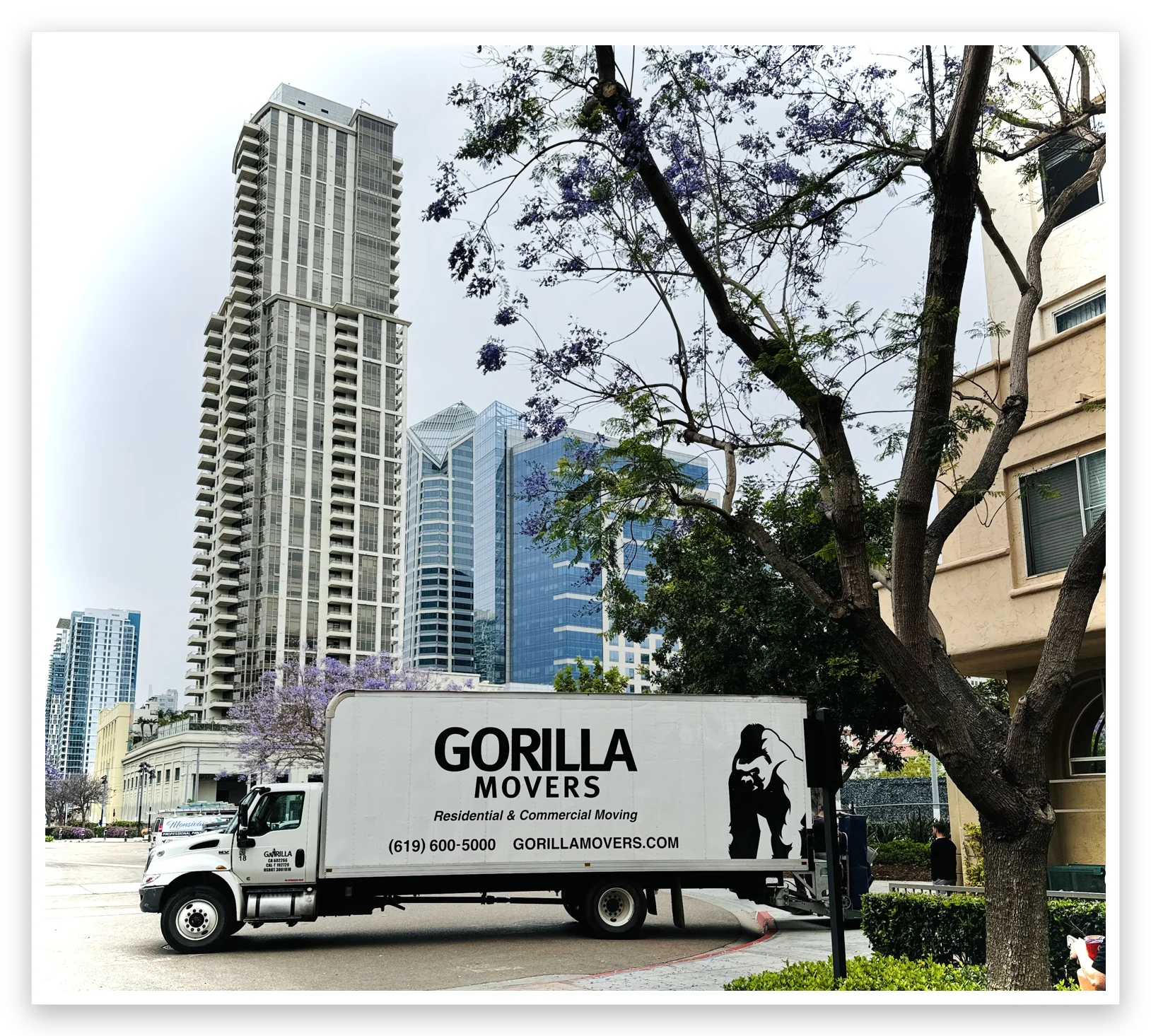
Moving into or out of a San Diego apartment takes three pieces of advance work: reserve the freight elevator with your building, get your movers' certificate of insurance (COI) to management before move day, and figure out where the truck legally sits. We handle the COI same-day and coordinate the rest, but you need to start with your property manager at least a week out.
A move we still talk about
A few years back we arrived at a downtown high-rise for a 9am move. The customer had done everything right, packed, labeled, ready. What nobody had done was reserve the freight elevator. Another tenant had it booked until 1pm, the building wouldn't budge, and a three-hour move became a seven-hour day with a crew standing by. That customer didn't do anything wrong; nobody had told her the elevator was a thing you reserve. This guide exists so that never happens to you.
Apartment moves aren't harder than house moves. They're just governed by rules that houses don't have, and every one of those rules is manageable if you know it exists a week ahead instead of the morning of.
The COI: what it is and why buildings demand one
A certificate of insurance is a one-page document proving your moving company carries liability and cargo coverage, so if a dolly clips the lobby drywall, the building bills our insurer, not you. Most managed buildings in San Diego require one on file before movers touch the property, and many want the building named as additionally insured with specific coverage minimums.
Here's the part that trips people up: buildings often won't confirm your elevator reservation until the COI arrives. So a slow COI stalls everything behind it. We send COIs same-day, tell us your building's requirements when you book, and the certificate is usually in your property manager's inbox before the elevator window is even confirmed. If you hire any mover who hesitates on a COI request, treat that as the red flag it is.
Elevators, docks, and the etiquette that keeps everyone friendly
Freight elevators get reserved in blocks, usually two to four hours, usually through your property manager or an online portal. Book the earliest block you can get, morning slots mean the elevator is clean, the dock is empty, and there's runway if the move runs long. Weekend blocks in big buildings disappear fast at month-end, which is one more argument for a mid-week move.
Loading docks have unwritten rules worth respecting: don't let the truck overstay the reserved window, keep the dock path clear, and never prop the freight elevator doors with a box, buildings hate it and some elevators fault out entirely. Our crews run a staging system for exactly this reason: one team feeds the elevator from the apartment while another loads the truck, so the elevator is always moving and never idling as a very expensive closet.
Parking and staging: where the truck sits decides how the day goes
At big garden-style complexes in Mission Valley or along the 15, the challenge is distance, visitor parking may sit a long walk from your door, and a 26-foot truck doesn't fit under most parking structures. We scout the closest legal staging point ahead of time and plan the carry path, because a hundred extra feet per trip adds up fast on an hourly move.
Downtown is a different game: metered curbs, loading zones with time limits, and one-way streets. Sometimes the answer is cones out early; sometimes it's a temporary loading permit. When a building or street needs one, we'll flag it in the quote so it's arranged before move day, not negotiated with a parking officer during it.
The walk-up playbook
Plenty of San Diego apartments, North Park Spanish fourplexes, Pacific Beach walk-ups, Hillcrest courtyard buildings, have no elevator at all. Stairs aren't a problem; unplanned stairs are. Tell us the flight count when you book and we staff accordingly, run stair rotations so nobody burns out by hour two, and use shoulder straps for the pieces that don't dolly. Free wardrobe-box use on local moves helps here too: clothes travel hung and boxes stay light enough to carry safely up three flights.
- Measure the stairwell turns before move day, sofas fail at the landing, not the doorway.
- Clear the route: doormats, plants, and bikes in the breezeway all slow a stair crew down.
- Box heavy, small; box light, big. Books in small boxes, linens in large. Your crew's knees thank you.
- If a piece won't make the turn, ask about hoisting or disassembly before you give up on it.
Getting your deposit back
California landlords must return your deposit, minus documented deductions, within 21 days, so your job is making deductions hard to justify. Photograph every room empty, including inside the oven and fridge, timestamped. Patch nail holes, replace burned-out bulbs, and match your walkthrough to the move-in checklist you (hopefully) filled out. Request an initial inspection before you hand over keys; California gives you the right to one, and it lets you fix issues before they become deductions.
Movers factor in more than people think. Careful crews protect door frames, banisters, and floors on the way out, a gouged hallway is the fastest way to lose a chunk of deposit on an otherwise spotless move-out. Floor and doorway protection is standard on our apartment jobs, not an upsell.
Downtown, UTC, and North Park are three different moves
Downtown high-rises are the most procedural: strict COI requirements, hard elevator windows, dock schedules, sometimes a security escort. The move itself is smooth if the paperwork is done, and a mess if it isn't. UTC's newer complexes are somewhere in the middle, professional management, online portals for reservations, generous docks, but strict about the rules they post. North Park, Hillcrest, and the older uptown neighborhoods flip the equation: almost no formal rules, but tight street parking, narrow stairwells, and 1920s doorways that make furniture geometry the main event. We plan each one differently, which is exactly what you're hiring a local crew for.