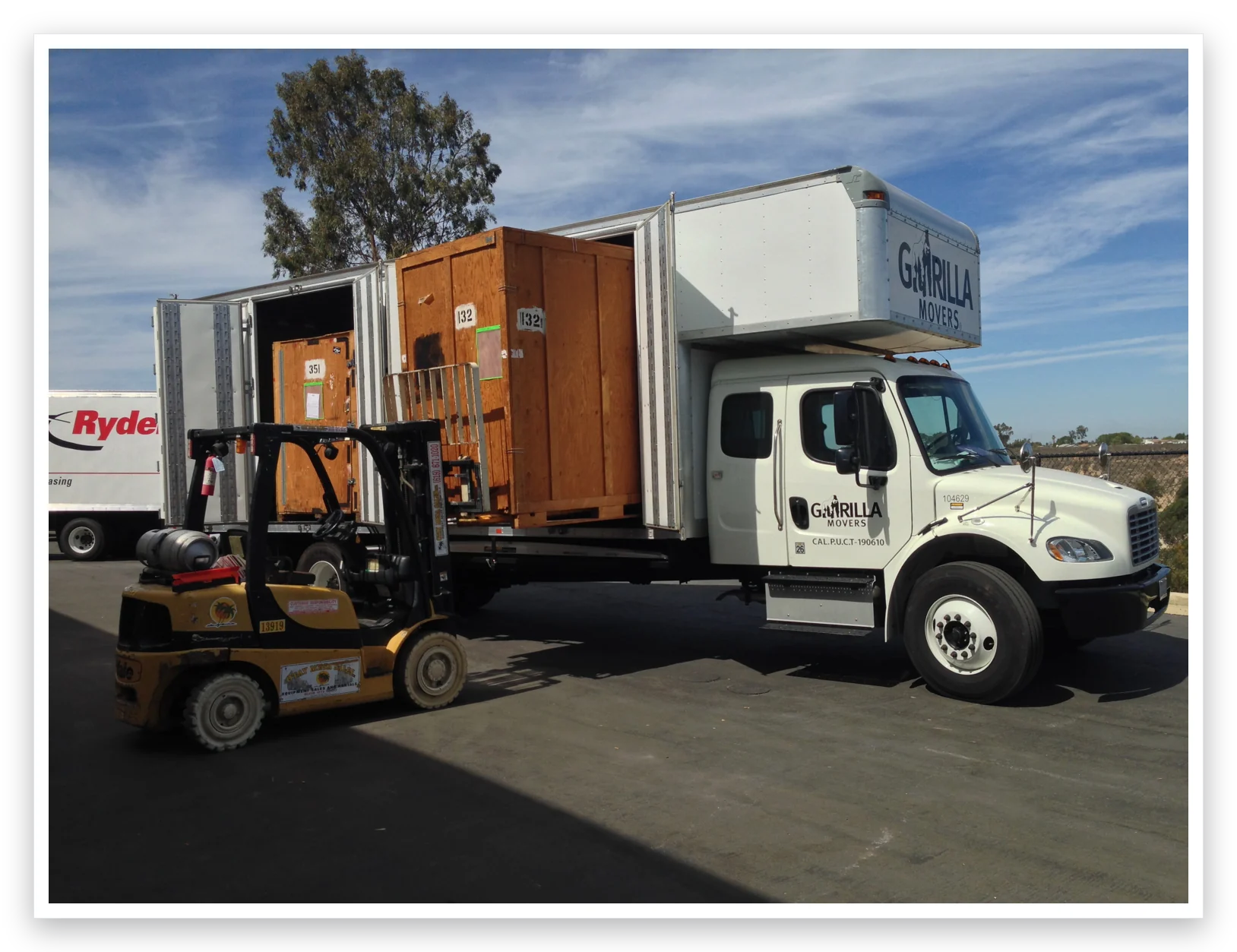
Moving a piano or safe safely requires specialized equipment, a piano board or heavy-duty dolly, ratchet straps, floor protection, sometimes stair rollers, plus a trained crew of three or four who know the technique. Uprights commonly run 300-500 pounds, grands and large safes considerably more, and the weight is never where you think it is. Hire a specialty crew; these are the two items that most reliably injure people and destroy floors on DIY moves.
Why these two items send people to the chiropractor
Every mover has a story about a customer who tried the piano first. The physics are cruel: a piano's weight sits high and shifts as it rolls, the case gives you almost nothing honest to grip, and the whole thing wants to pivot the moment it tilts. A safe is denser and dumber, a compact block that concentrates several hundred pounds onto four small feet, which is exactly the recipe for punching through hardwood or riding away from you on a ramp.
The injury pattern is predictable enough that we could write the incident report in advance. Somebody lifts from the back, the load shifts, and the choice becomes drop it or become the thing it lands on. Backs, fingers, and toes lose that negotiation. So do stair treads, door frames, and the hardwood you refinished last spring. A chiropractor bill plus a floor repair costs more than the specialty crew would have, and the piano usually needs a tuner afterward anyway.
The equipment that makes it look easy
When a trained crew moves a grand piano and it looks effortless, you're watching equipment and rehearsal, not muscle. The core kit:
- Piano board (skid board): a padded plank the piano is strapped to on its side, turning an unbalanced instrument into a controlled, rollable load.
- Heavy-duty four-wheel dollies rated far beyond the load, consumer dollies fold at safe weights.
- Ratchet straps and lifting straps: the load is secured to the board and the board is controlled by the crew, never freehand.
- Stair rollers and ramps: for safes, stair-climbing gear lets the crew walk the load down a flight one controlled step at a time.
- Floor protection: Masonite or ram board along the entire path, because a 700-pound point load finds every soft spot in a floor.
- Blankets and shrink wrap: a piano's finish scratches if you look at it wrong; wrapping is not optional.
Technique: slow is smooth
The crew choreography matters as much as the gear. A grand comes apart first, lid, lyre, legs off, each wrapped separately, then the body tips onto the piano board in one rehearsed motion with a mover braced on each end. An upright stays whole but rides a board or dolly with a spotter on the downhill side at all times. Safes get strapped to a stair-climber or walked on rollers, with the crew positioned so that if the load ever wins, it wins into empty space, not into a person.
Stairs are where amateur moves die. The rule is one commander calling the pace, the load moving inches at a time, and nobody ever below the load without an exit. On San Diego's split-level hillside homes, Mount Helix, Del Cerro, half of La Mesa, we sometimes route a piano out a lower patio door instead of down the interior stairs, because the best stair technique is finding a path with fewer stairs.
When a crane is actually the right call
Almost never, and occasionally absolutely. A crane or hoist enters the conversation when the piece physically cannot travel the interior route: a grand piano destined for a second-floor room whose staircase turns too tight, a balcony-access condo, a safe going into a basement with no stair access. Then the math changes: a window or balcony hoist with proper rigging is safer and often cheaper than four hours of forcing a bad route.
We'll tell you which situation you're in during the quote, not on move day. Most customers who call convinced they need a crane don't; a good crew with a board and a plan handles the overwhelming majority of pianos through ordinary doors. But when a hoist is genuinely needed, pretending otherwise is how walls get opened.
What it costs, and why it's a line item
Pianos and safes are quoted as their own line items on top of the hourly move, and there's real logic to that: they need extra crew, dedicated equipment, and time that a normal move doesn't. The price scales with the honest difficulty, an upright rolling from a ground-floor living room to a truck is the easy end; a baby grand down a switchback staircase, or a large gun safe up to a second floor, sits at the other. Flights of stairs, carry distance, tight turns, and the piece's weight class are what move the number.
The itemized approach means you see exactly what the piano or safe adds before you book, it's in the written quote within one business hour, fuel and all, not discovered as a surcharge when the crew sees the staircase. If you only need the one item moved and nothing else, we do standalone piano and safe jobs too; that's what our small-moves crews are for.
If you insist on DIY, at least do this
We'd rather you didn't. But if it's a light upright, a straight ground-floor shot, and you won't be talked out of it: rent a real piano dolly, recruit four adults, wrap the piano completely, protect the floor along the whole route, keep hands off the casters (they're decorative, not functional, on most pianos), and never let anyone stand downhill of the load. For a safe of any size on any stairs, no. That's the one we'll flatly tell you not to attempt. The failure mode isn't a scratch; it's a fulcrum and someone's foot.