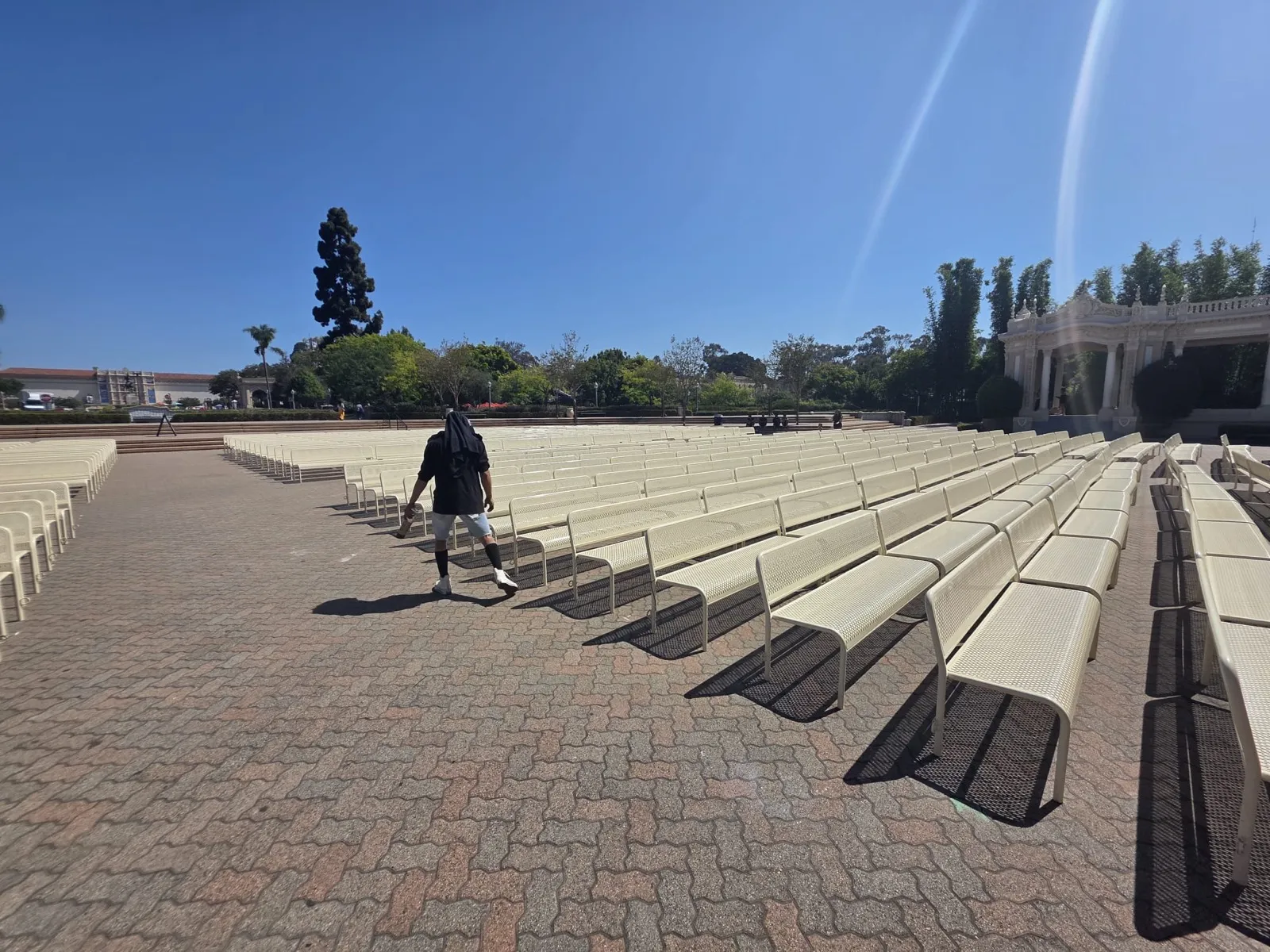
Event load-in is moving and setting everything an event needs (seating, tables, staging, furniture, and freight) into the venue on the venue's schedule; teardown, or strike, is clearing it all back out afterward, usually on a tight late-night or early-morning window. Event labor is normally billed by the crew hour, and the biggest cost drivers are crew size, the venue's dock and timing rules, and how much has to be reset to normal before the space reopens.
What load-in and teardown actually cover
Load-in is everything that has to happen before guests arrive: unloading the trucks, moving seating and tables into place, staging furniture and decor, positioning staging decks, and getting the room set to the floor plan. Teardown, which the events world calls the strike, is the reverse, breaking the room down, reloading, and often resetting the venue to its normal state before it reopens to the public.
The heavy, physical half of that (chairs, tables, benches, crates, and furniture) is moving and labor work, separate from the AV, lighting, and rigging a production or stagehand crew handles. It is the part where a real moving crew earns its keep.
How much does event labor cost?
Event labor is almost always billed by the crew hour rather than a flat rate, because no two venues give you the same access, timing, or floor plan. The number that matters is total crew hours: how many people, for how long. A small setup might be a two-person shift; a full venue reset can be a ten-person crew working against a hard deadline.
The biggest cost drivers are crew size, the venue's dock and elevator windows, whether the work runs during premium late-night or early-morning hours, and how much has to be reset afterward. A written estimate should itemize the crew, the hours, and any COI or after-hours requirements up front.
The thing that wrecks timelines: the venue's schedule
A general mover moves on their own schedule. Events do not work that way. The venue hands you a dock window, an elevator reservation, a load-in time, and a hard move-out deadline, and everything has to fit inside it. The crews that make events run are the ones who plan around those constraints instead of fighting them.
That is why the reset after Patrons of the Prado's MASTERPIECE gala started at 5 a.m.: the benches had to be back in place before Balboa Park opened, not whenever it was convenient. Plan the labor around the venue's clock, and the load-in stops being the scary part.
A quick event load-in checklist
Before the trucks roll, nail down the logistics that actually move the timeline:
- Confirm the dock, elevator, and load-in windows in writing with the venue
- Get the floor plan and the exact reset-to-normal expectation for teardown
- Size the crew to the count and the deadline, not the budget you wish you had
- Line up certificates of insurance (COIs) with additional-insured naming for the venue
- Protect historic or finished floors, doorways, and elevators before the first item moves
- Assign one point of contact who owns the run-of-show and the venue's rules
When to hire a crew vs. do it yourself
For a small gathering with a few tables, volunteers and a couple of strong hands are fine. Once you are moving hundreds of chairs, heavy staging, or resetting a venue on a deadline, hire a professional crew: employees, not day labor, insured, and used to working a venue's schedule. The math almost always favors the crew that finishes on time over the one that finishes cheap and late.