The safest way to move with pets: keep their routine steady in the weeks before, visit the vet for records and updated tags, transport them in your own vehicle in a secure carrier (never in the moving truck), and confine them in a closed, labeled room or off-site during loading hours. At the new home, set up a familiar-smelling space first and let them expand into the rest at their own pace.
The mover's-eye view: why moving day is risky for pets
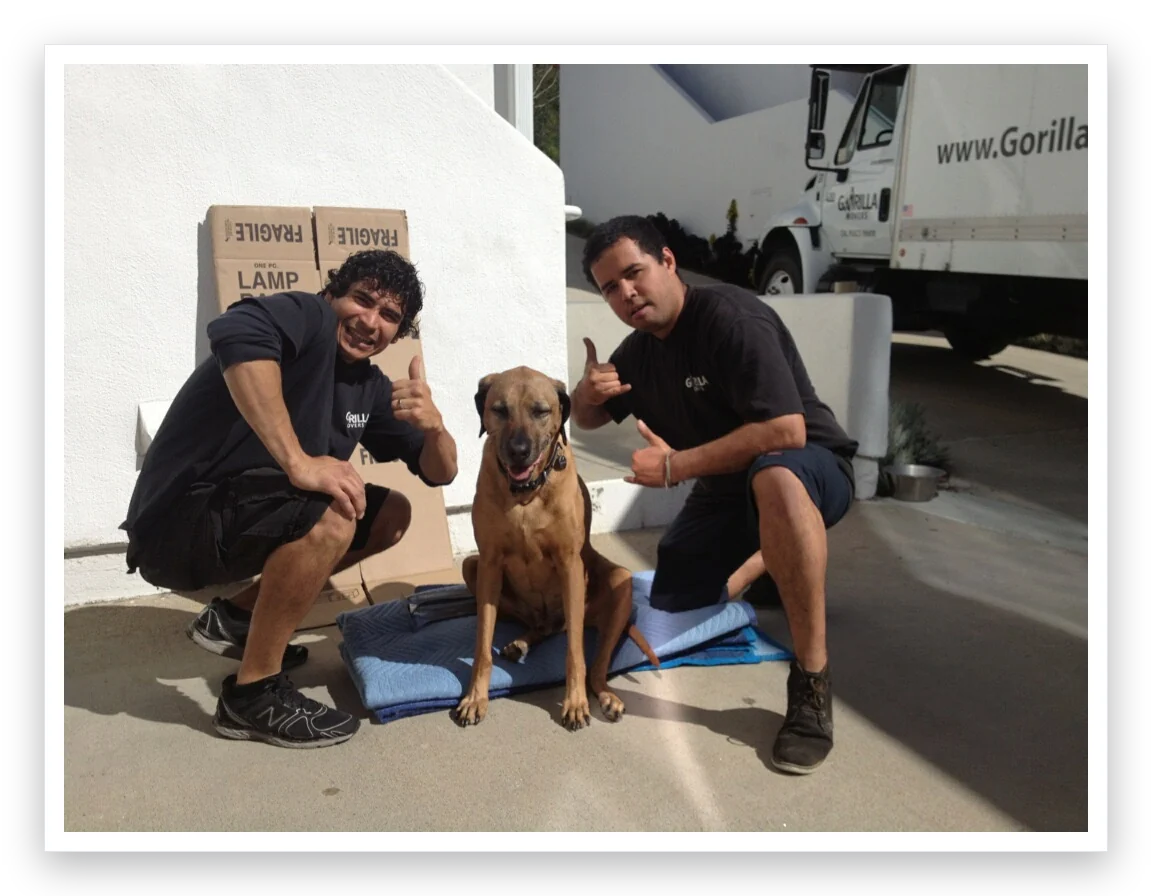
Here's what 18 years of moves have taught us about pets: the danger isn't the drive, it's the doors. On move day, the front door stays propped open for hours while a crew walks a loop through the house. That's when cats vanish and dogs bolt, into a new neighborhood where nobody knows them, on the single most chaotic day to go searching. Every experienced mover has a story about a move paused for a pet search, and none of us want another one.
Underneath the escape risk is plain stress. Animals are territory creatures; watching their territory get carried out piece by piece genuinely rattles them. So a good pet plan does two jobs, physical containment on the day, and stress reduction before and after.
The weeks before: routine, vet, paperwork
Keep feeding times, walks, and play sessions on their normal schedule right through the packing weeks, the routine is your pet's evidence that the world still works. Bring boxes into the house gradually rather than in one alarming avalanche, and let curious pets inspect them.
Book a vet visit before the move: confirm vaccinations are current, get a copy of medical records, and stock enough of any medication to cover the transition plus a buffer. If you're leaving the practice's service area, ask for a referral. This is also the moment to update the microchip registration and ID tags with your new address and phone, do it before moving day, because the day a pet is most likely to slip out is the day the old tag is most wrong.
Travel setup: your car, their carrier, never the truck
Pets ride with you, in your vehicle, full stop. They cannot ride in the moving truck, the cargo box isn't ventilated, temperature-controlled, or legal for animals, and no reputable mover will load one. Plan your car's cargo space accordingly.
In the car, use a well-ventilated carrier or crash-rated harness sized so the animal can turn around comfortably. Dogs on longer drives need scheduled stops for water, bathroom breaks, and leg stretches, leashed before the door opens, every time. Cats do best with the opposite treatment: a covered carrier, a quiet cabin, and no well-meaning mid-drive cuddle breaks. Pack a pet travel bag you can reach without unpacking anything: food, bowls, water, leash, waste bags, meds, a familiar toy, and a towel that smells like home.
- Carrier or restraint harness, loose pets in cars are a hazard to everyone
- Food, water, and bowls for the day plus a spare day
- Leash on BEFORE any car door opens
- Meds, records, and the vet's number
- One item that smells like the old house
Moving day: one closed door solves almost everything
The cleanest option is getting pets off-site entirely, a friend's house, a familiar boarder, or doggy daycare during loading hours. Absent that, pick one room the crew will empty first (a bathroom works well), move the pet in with water, bedding, and a litter box, close the door, and tape a sign to it: PET INSIDE, DO NOT OPEN. Tell the crew lead too; ours ask, because it's that important.
Load the pet's own gear last so it's first off the truck at the new place, and don't release anyone from their room or carrier until the moving-in flurry is done and every door and gate is confirmed shut. Ten extra minutes of patience here prevents the search party.
Settling in: shrink the new home to pet size
At the new place, don't give a stressed animal the whole floor plan at once. Set up one room first with their bed, bowls, litter box, and toys, unwashed, so they smell like the old life, and let them own that room before the territory expands. Cats may take days to venture out; that's normal, not a crisis. Dogs settle faster with the old walk schedule restarted immediately, on-leash while the new neighborhood's dogs, gates, and traffic patterns are still unknowns.
Expect some off behavior for a week or two, hiding, appetite dips, extra vocal opinions. Patience and routine fix most of it; a vet call handles the rest. One San Diego note: if your move lands on a warm day, never leave a pet in a parked car while you run keys or paperwork, even winter sun here heats a closed car fast.
And that's the real answer to the question in the title: the best way to move pets is to make yourself their whole moving crew. Let us carry every box and stick of furniture, that's the part we're built for, so your hands and attention are free for the family member who doesn't understand what's happening.