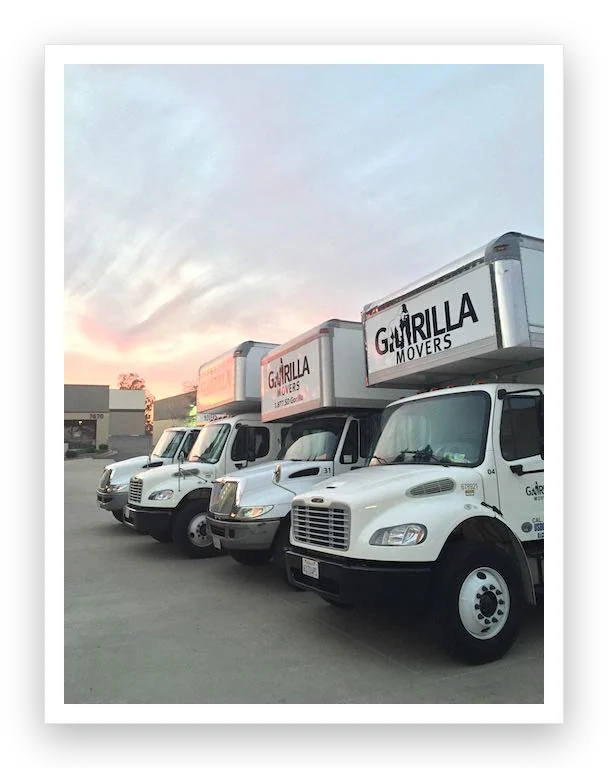
Look for five things in a commercial mover: verifiable state and federal licensing with insurance, a track record you can check through reviews and business references, transparent written pricing before anyone touches a desk, company-owned trucks with employee crews, and a service range that covers the whole job, packing, specialty items, and storage. A mover that passes all five almost never surprises you on move day.
Start with the license, not the logo
Every legitimate California mover carries a state motor carrier permit and, if they cross state lines, a USDOT number. Ours are CAL T-192729 and USDOT 3801918, and we print them because you should be able to verify them in about two minutes. A company that gets vague when you ask for numbers is telling you something.
Licensing matters because it drags insurance along with it. Liability coverage, cargo coverage, workers' compensation, the permits require proof of all three. Hire an unlicensed crew and a dropped server rack or an injured worker becomes your problem, on your premises, on your policy.
A track record you can check yourself
Reviews are the fastest audit available. Read the Google profile, the BBB listing, and the one-star reviews specifically, how a mover responds to a bad day tells you more than a hundred five-star ratings. Look for reviews that mention business moves, not just apartments, because the skill sets differ.
Then ask for two references from companies roughly your size. Any commercial mover with real volume has clients happy to take that call. We've been at this since 2008, and 97.9% of our work comes from repeat customers and referrals, that number only happens when the phone calls go well.
Pricing in writing before anyone lifts anything
A commercial quote should follow a walkthrough, on site or by video, and arrive in writing with the hourly rate, crew size, truck count, and fuel listed as its own line. We put a written quote in your inbox within one business hour of the walkthrough. If a mover quotes your office over the phone without seeing it, the number is a guess, and guesses grow.
Watch for the deposit trap. Reputable commercial movers don't demand large payments up front, and they don't have a rate that changes once your furniture is on the truck.
Trucks they own, people they employ
Ask who actually shows up. Some companies book your move and then staff it with day labor hired that morning. Our crews are uniformed employees, background-checked, trained on our equipment, and accountable to us tomorrow. That's the difference between a crew that protects your conference table and one that's never seen a furniture blanket.
The fleet tells the same story. Clean, maintained trucks with working liftgates and real protective equipment mean your assets ride safely. A rented box truck with loose ratchet straps means improvisation, and improvisation breaks monitors.
Range that covers the whole job, not just the heavy part
Most office moves are more than loading. You may need packing crews for the file room, crating for artwork or lab instruments, overnight storage between lease dates, or furniture installation at the new site. A mover that offers one service will subcontract the rest, and subcontractors are where accountability leaks.
Ask for a custom plan in writing: what's included, what's extra, who handles the building's certificate of insurance. When the answer to every piece of your move is 'we do that in-house,' your vendor list just got shorter and your move got simpler.